Grinnell College Logo

HIS 295, Professor Sarah J. Purcell

Category: Week 5: 1876 (Page 1 of 3)

The Election of 1876: A Comparison to 1824 and 2000

If the election of 1876 were a sitcom, it would have all the tropes, at least, for an election. Voter fraud, disenfranchisement targeting people of color, shady behind-the-scene deals—you name it, the 1876 Election has got it. 

As votes from the 1876 Election were being counted up, Rutherford B. Hayes, the Republican candidate, called election fraud. Only, unlike some, he was right. Voting ballots had truly been manipulated, specifically targeting newly enfranchised Black voters into wrongly voting for their choice of candidate. Military groups intimidated voters at the polls and at home, using political violence to sway the election outcome to their side. It wasn’t until March of the next year that Hayes would finally be named the President—but only after he made a deal to end Reconstruction. 

We can draw parallels both to the past and the future for the 1876 Election. Just like in the 1824 Election, in that infamous “corrupt bargain” that allegedly gave John Adams the election and Henry Clay the position of Secretary of State, conversations to make Hayes president were going on behind closed doors. Hayes, though an abolitionist himself, became known as the president who failed Reconstruction in exchange for his own political position. 

The Election of 1876 also draws parallels to a more recent one, the 2000 Election. Both elections took months to resolve and required special intervention. In the case of 1876, it was creating the new Electoral Commission to settle the race. For 2000, the Election was thrown to the Supreme Court. Issues of voter fraud came up in both presidential races, too. 

From these parallels, we see that political bargaining, contestation, and voter fraud is nothing new to the United States. In 2020, former President Donald Trump tried to appeal to this cycle in history, saying voter fraud had lost him the election. There was no such proof of this statement. 

Yet, as these issues do not exist in a vacuum, they are, in fact, important to keep in the forefront of our minds. The projected gap between presidential candidates Kamala Harris and Donald Trump is projected to be narrow in the 2024 election. Maybe the cycle is set to run again this year. 


The Power of One Vote

The sentiment that your vote doesn’t count has long been building in the United States of America. This type of thinking is especially dangerous in a democracy when it’s been proven that one vote can be the difference between victory and defeat. This reason alone might not be enough to convince someone to vote, so hopefully the issue of autonomy can convince them. In the past, marginalized groups in this country didn’t even have the chance to vote and were actively prevented from it. To disregard your own privilege in the current day is a disservice to everyone who fought for the right to vote. In the Elections of 1860 and 1876, it was evident that this country wasn’t ready for African Americans to be near society, let alone part of the voting block. 

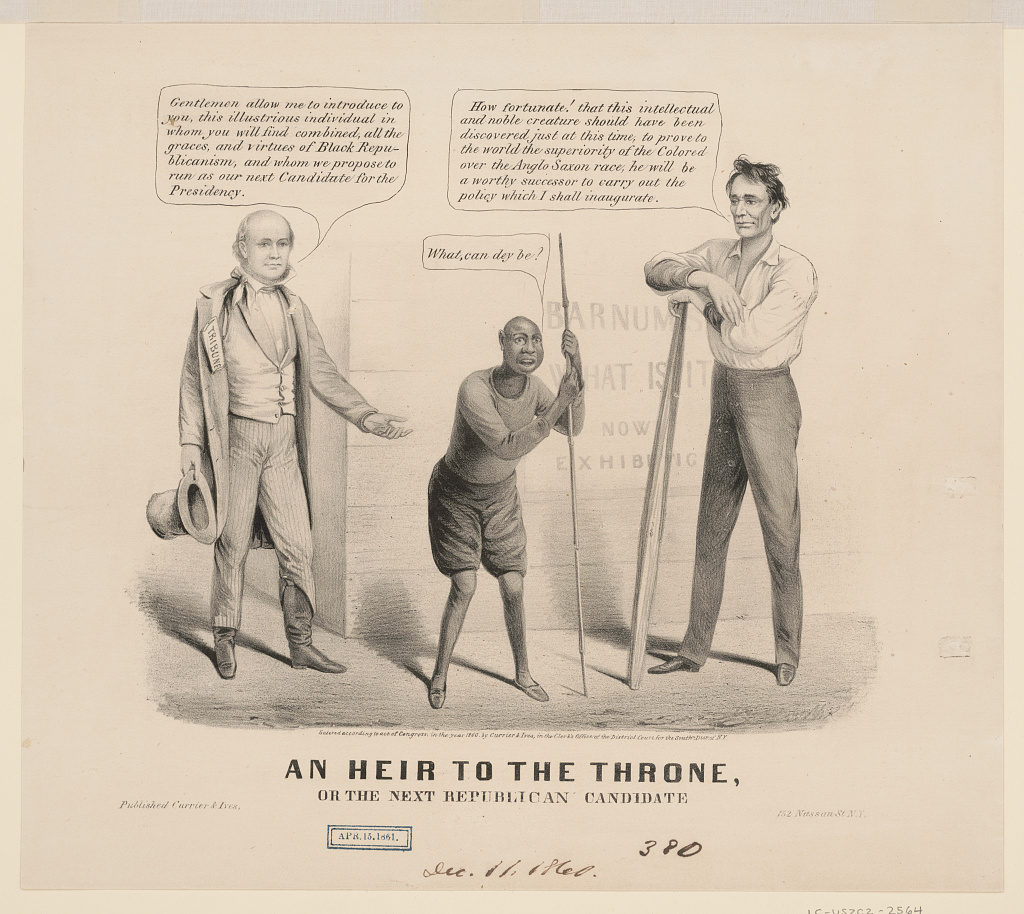
A modern day misconception of the Election of 1860 is that Abraham Lincoln was a staunch anti-slavery candidate. However, this was not the case; he merely opposed the expansion of slavery into newly admitted states. This small threat to the institution of slavery showed how important the suppression of black rights was to southern people. The only time Southerners showed concern for black voting rights was when they were determining how much their population should count toward representation in the House of Representatives. The South seceded from the Union because of the slight threat that they found to their own voting power. 

Published by Currier & Ives, c1860.

Their perceptions of how extreme and radical the other side were is evident in cartoons like this. They attempted to paint the Republican party as completely anti-slavery and extremely sympathetic to blacks which simply wasn’t the case. Anything besides the enslavement of black people in this country was unacceptable to the white population. These viewpoints were carried on into the Civil War and throughout Reconstruction. The Election of 1876 was another controversy that proved the nation was not ready for egalitarian voting. As the black population became involved in voting and even getting to some public offices, there was disproportionate blowback soon after the Civil War. Autonomy for blacks wasn’t as important to Rutherford B. Hayes as securing his election victory. Even though the 13th, 14th and 15th Amendments were passed in the previous decade, the Ku Klux Klan and many others committed horrible violence to keep the newly enfranchised blacks out. This didn’t completely prevent their involvement in politics because many were willing to fight for their constitutional right. The election of Hayes, however, was the nail in the coffin for this population and their autonomy wasn’t fully realized until around a century later.

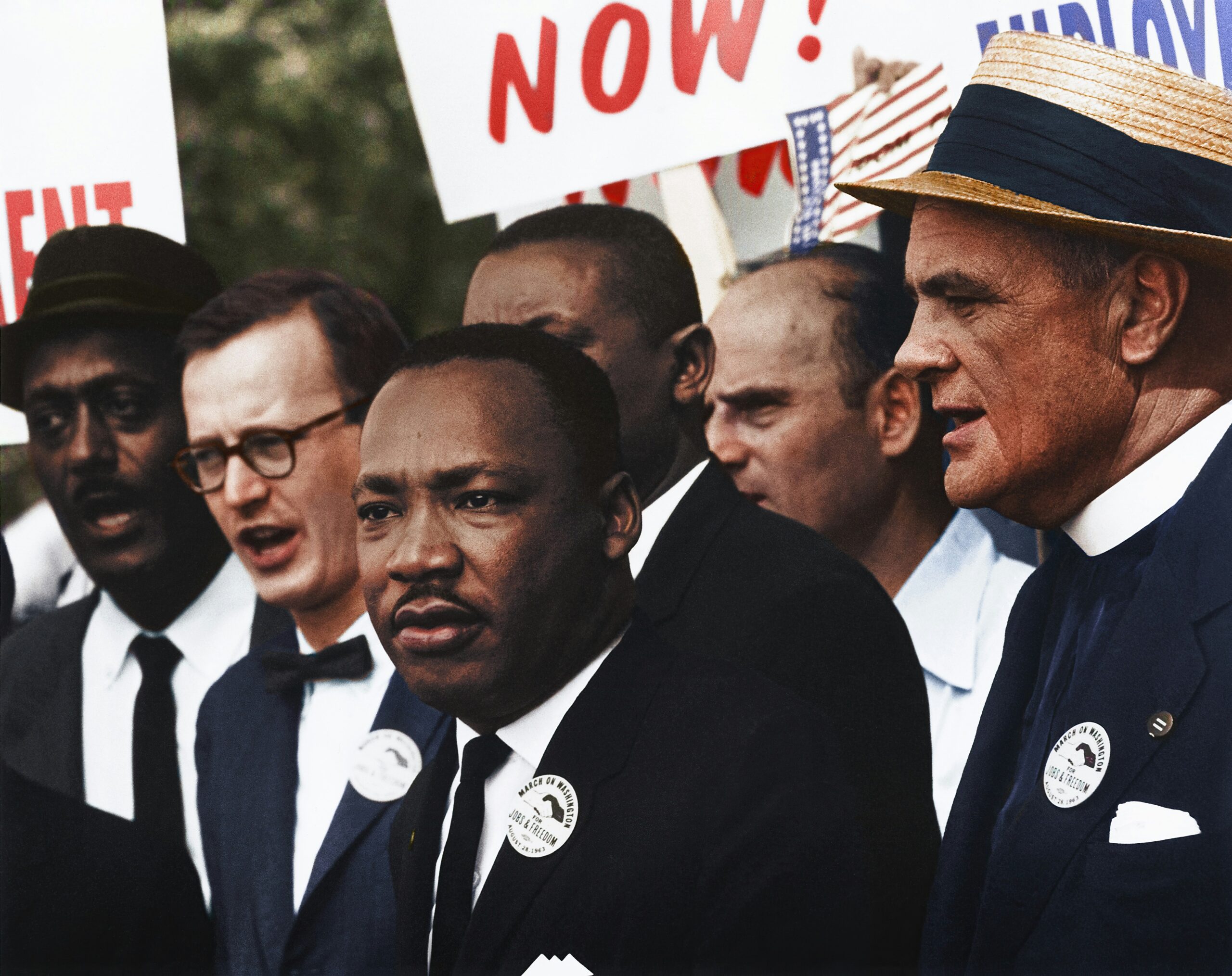
Dr. Martin Luther King, Jr. by Rowland Scherman and Jordan J. Lloyd.

The fact that many had to fight their whole lives to attempt to overcome adversity to even get the legal right to vote should inspire you to cast your ballot without hardship. 

Pathways to Contesting an Election: The Vote

Many moving into the 2024 election have been worried about the outcome being contested. Elsewhere   I have looked at some potential structural challenges to the election – via Congress and via the Judiciary – but there is still one element of the electoral process that could majorly play a role in the election, which is the voting process itself.  Under the umbrella of the voting process there are two major areas, one of which has been more resistant to challenges in recent history than the other.  The first is who votes and how, and the second is how the votes are counted.

In the last 50 years (until 2020) the public consciousness has not placed much importance on the issue of who votes.  The assumption is that any 18-year-old citizen has the right to vote, regardless of race or gender.  While who does vote was considered, the ability to vote was assumed.  This has not always been the case, and it is very important to remember that a potential contributor to a contested election is who gets their vote counted.  This is a precedent set by 1876, where massive voter suppression campaigns in the form of violence and regulations designed to prevent black people from voting caused the votes cast to be suspect, forming the basis for the disputes over the election in 1876.  Based on the example of 1876, it is very important to focus on who is allowed to vote, and it is not a solved problem.  For example, many states have started to pass laws that are considered by some to be voter suppression, and the consent decrees created by the Civil Rights Act have started to be weakened.  The campaign to reduce the power of mail in and absentee ballots, when combined with the weakened enforcement of the Civil Rights Act indicates the possibility of a slide back towards a time where universal suffrage was not assumed, which could contribute heavily to a contested election in 2024, just as it did in 1876.

In addition to who votes, the method of counting votes is another potential way to challenge the results of an election.  The clearest example of this was in 2000 in Florida, where frequently changing and unclear voting laws resulted in the judicial challenges to the election and were the grounds on which the Supreme Court decided the election for George W. Bush.  The debate over how a vote is counted is not one that is confined to the 2000 election.  In 2020 there was a lot of noise (and court cases) put forward about voter fraud, which was the underlying concept that caused the election to be considered “contested.”  Combining the continued rhetoric over voter fraud with states like Georgia and elsewhere, where the vote counting process is in flux and changing frequently, the conditions that precipitated a contested election in 2000 and 2020 appear to be present heading into 2024.

While suffrage and the vote counting process is something that, after the Civil Rights movement, many Americans had accepted as automatic, the 2000 and 2020 elections demonstrate just how important paying attention to these processes are in ensuring uncontested elections.  In the extreme case, the election of 1876 serves as a reminder of what can happen when these areas are ignored, meaning that heading into 2024 the rights to vote and have your vote counted need to be defended in order to avoid destabilizing contested elections, and are strong candidates for pathways to a contested election this year.

Pathways to Contesting an Election: Congress

The potential outcomes of the 2024 election are a prospect of the utmost importance to many Americans right now.  Many people are feeling as if a contestation of the results is automatic, after what happened in 2020.  Using history as a way of predicting these outcomes, however, is not the answer.  The pressing nature is not a reason to engage in prediction, in fact it probably makes the reasons for avoiding prediction even stronger.  But lessons from the past can still help us to contextualize potential futures.  One of the major ways we can use historical lessons is to take stock of potential options should the election be contested, which is what I will do here.

There are three broad ways of contesting an election, as the past tells us.  To overturn the results, one can attack the electoral count in Congress, in the Courts, or one can attack the voting process itself.  In this post, I will focus on the relevant parts of a Congressional challenge to the electoral count, as seen in previous elections.

One avenue that appears to be a difficult one after the 2020 election is the certification of votes by the Senate itself.  In the 2020 election, Trump placed pressure on Vice President Mike Pence to approve an alternate slate of electors that would elect Trump instead of Biden.  Pence resisted this pressure, reaffirming the pastoral role of the Vice President in the electoral count.  The same pressure is unlikely to exist in 2024, as Kamala Harris will still be the Vice President, making the Vice Presidential avenue of Congressional contestation unlikely, although potentially still possible.  The avenue from 2020 that is likely still on the table is objections to certain state’s electoral slates by individual congresspeople.  In 2020 this failed because most congresspeople did not support rejecting the electoral slates, but this resistance may have changed based on recent rhetoric from many congresspeople.  Still, the amount of support in Congress required to make this avenue successfully challenge an election is worth keeping in mind moving into 2024.

A second possible path to contestation involving Congress is the standard set in 1876.  In 1876 a committee was created to resolve the competition between slates of alternate electors sent in by some states.  This bipartisan committee included members of the Senate, the House, and the Supreme Court (but not in their capacity as justices).  This was considered one of the better compromises that could be put together on short notice and was effective in deciding the election before the inauguration deadline.  It seems possible that some congresspeople would (and did in 2020) favor this solution in the event of a contested election, as state submission of alternate states is a potential concern in the upcoming election, since it has happened before in 1876.  The thing that makes this solution unlikely is that it requires agreement in the legislature, as it is not a procedure that is laid out in any law.  In 1876 it was the solution chosen under the authority of Congress to resolve the electoral dispute, but today the challenge system that was employed in 2020 (dual sponsorship of a resolution to debate a slate of electors) is a procedure written into the Electoral Count Act of 1887, making that the more likely system of resolution in the legislature.

Of course, there is always the possibility that neither candidate gets a majority of the electoral vote, leading to the election being decided in the House of Representatives.  The precedent there is clear, and the procedures to get there relatively strict, restricting this path to a contested election to a very narrow set of circumstances.  Should it happen, however, there would likely be a very political contest, as it is unclear how exactly states will decide their individual votes.   Overall, many of the potential paths to contesting the 2024 election could pass through Congress but it is not a guarantee.

Really, we are still suppressing?

Land of the free, home of the brave, country of voter suppression! Not allowing certain groups of people to vote seems almost comically antiquated, but fret not, we are still on that train! With the 2024 presidential election, it seems crucial to dive into the necessities of voting, as well as the history of voting being taken away from people, specifically minorities. While things are not as bad as they used to be, in fact really far from that, there are still patterns of racial discrimination within the voting system.

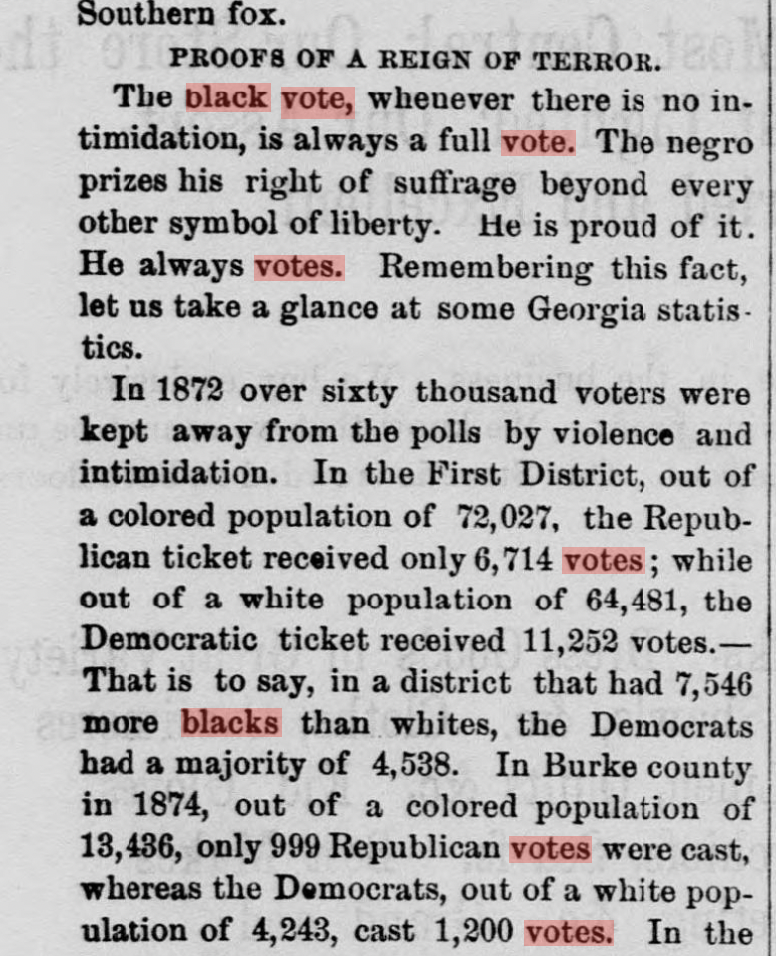
Here is a little crash course on the landscape of voting after the civil war and during the reconstruction period. Before the civil war, black men in the south were allowed to vote but their vote only counted as three thirds of a vote, and truth be told, they did not have a right to vote, they had the obligation to vote for whoever their enslavers were voting for. This is much more complex and difficult then the long sentence I have just written about it, but we will go off of this information for now. After the civil war, in 1870, black men were finally given the right to vote in the south. While this is in theory nice, as one can expect, it is not actually what happened. Many obstacles were set in place to prevent freed black men from voting, such as literacy tests, poll taxes, and straight up terrorism from the Ku Klux Klan. In fact, during the election of 1870, President Johnson of the democratic party (party of the recently succeeded then returned states), attempted, very lightly, to get the southern states to protect the vote of the newly freed black men. As history shows us, this failed miserably, almost as miserably as reconstruction. Klan attacks were numerous, and people were terrorized, sometimes even killed. This led to a hundred more years of black people fighting their way to equality, especially when it came to voting.


Excerpt from the West-Jersey Pioneer, published on October 26th, 1876. Retrieved from the Newspaper archives of the Library of Congress.


It is easy to believe, or even expect, that such things would not be happening today. How could our progressed society show signs of such antiquated bigotry. But no, this problem, while manifesting differently, still exists. Latosha Brown, a community organizer, political strategist, and consultant, admitted on NPR to being worried about the way votes were going to be counted due to new rules which might be purposely disenfranchising certain groups. This poses a significant threat to our Democracy. If minorities are having their right to vote purposefully taken away, how can we possibly say we have evolved from the era of the 1870’s?

Does One Party Have a Monopoly on Patriotism?: Campaign Songs and Partisanship

The presidential election of 1876 was contested between Republican Rutherford B. Hayes of Ohio and Democrat Samuel J. Tilden of New York. Tilden won more electoral votes, but the ballots in several states, Florida, Louisiana, South Carolina, and Oregon, were disputed. An Electoral Commission established by Congress confirmed Rutherford B. Hayes as the winner, despite not having won a plurality of the national popular vote. The election was influenced by electoral fraud, voter intimidation, and disenfranchisement of Black voters. The contest was only resolved by the Compromise of 1877, where Hayes promised to end Reconstruction in exchange for his election as president.

Since the very first presidential election, music has been an important part of campaigning and American political culture. Songs written specifically for a campaign might extol the virtues of the candidate or attack the vices of an opponent. Supporters of Samuel J. Tilden and his running mate Thomas A. Hendricks promoted their candidacy with a song called the “Grand March.” Usage of the music was not restricted to the campaign or its supporters—its sheet music was made available to military bands, orchestras, and choruses. Although some campaign music named candidates or opponents specifically and by name, others, including the “Grand March,” had a broader, less partisan, and more patriotic appeal. A song called “Adams and Liberty,” written to celebrate President John Adams, is sung to a melody that is now know as “The Star-Spangled Banner.”

In modern politics, campaign music continues to be influential. Sometimes a particular song becomes strongly associated with a candidate, such as Fleetwood Mac’s “Don’t Stop” and former President Bill Clinton. Music can also serve to subtly (or less so) hint at the values of a campaign and party. For example, Democratic presidential nominee Vice President Kamala Harris using Beyoncé’s song “Freedom” in her campaign advertising, the Republican National Convention featuring a performance by Kid Rock, and the Democratic National Convention including a musical roll call. Lee Greenwood’s song “God Bless the U.S.A” was originally not used in campaigning, with Greenwood saying that he wrote it for all Americans. However, he agreed to sing it for Ronald Reagan, turning it into a song that is seen as primarily Republican. In fact, Republicans are often seen to have a monopoly on patriotism in modern political culture. However, the Democratic Party is currently pushing back against that idea. In addition to their music-based show of state pride, the 2024 Democratic National Convention placed a heavy emphasis on patriotism, including chants of “USA” and intense use of the American flag. Since the party system first developed, both have seen themselves as the true protector of American democracy and the other as a threat. This competition over which side is more truly American can be seen throughout modern politics and historical elections, including in the fight over campaign songs.

Sources

A political playlist: The fight over campaign songs

At convention, Democrats claim patriotism, American flag as their own

Democrats try to take patriotism back from GOP

Disputed Election of 1876

Early Rally Songs – Voices, Votes, Victory: Presidential Campaign Songs

How the Democrats reclaimed patriotism

Voices, Votes, Victory: Presidential Campaign Songs Forgotten Candidates

Massive Voter Fraud

Donald Trump and the modern Republican party love to accuse the Democrats of “election fraud” Oooooh scarry! And yet, fact check website Snopes writes “There’s Still No Evidence of Systematic Voter Fraud in the 2020 Election.” But hey, let’s give them the benefit of the doubt maybe they are just still thinking about the election of 1876. The election of 1876 was also contested due to republican accusations of democrat election fraud in several key states. The big difference between 2020 and 1876 is that the election fraud was only real in 1876.

The election of 1876 was between Democrat Samuel Tilden and Republican and man who just has a real “president name”, Rutherford B. Hayes. Votes were disputed in Florida, Louisiana, Oregon, and South Carolina. In these states, Democrats had intimidated Black voters and white Republicans, and their families through violence or the threat of violence. In some precincts, some Democrats stuffed ballot boxes with extra votes or printed Democratic ballots with the Republican logo to trick recently emancipated Black people who were often illiterate. With the falsified results, technically Tilden could seem like the winner, but the election ultimately went for Hayes. Hayes in turn agreed to end reconstruction through a “policy of conciliation”. The rest of Hayes’ career was haunted by the election as his contemporaries referred to him as “his Fraudulency” and Hayes’ legacy was soiled as “the man who ended reconstruction”.

One thing that the 1876 election, 2020, and almost certainly 2024 do have in common is that there was an organized effort to stop people from voting. As Ari Goldberg writes, a study by the Bipartisan Policy Center, found, “…precincts with a high percentage of minority voters, renters, and lower incomes saw significantly longer wait times.” Additionally, as the League of Women Voters argues, contemporary voter ID laws are part of an effort to “promote voter suppression”. While the voter fraud Donald trump loves to scream about a problem that doesn’t exist, there are still certainly efforts to deter some people from voting.

The Specter of Corruption

Throughout election history, corruption has functioned as a fear mongering tool that uses justice (imagined or realized) as a bargaining chip. However, it is impossible to ignore the hypocritical nature of most corruption accusations, which set a strange precedent regarding “acceptable” corruption and raises questions about the broader implications of corruption.

Weaponizing Corruption

The election of 1876 saw how Republicans and Democrats used actualized corruption as leverage in bargaining with each other. Southern states had recently re-joined the union, albeit reluctantly, post-Civil War. In the wake of the battle between the Republican Rutherford B. Hayes and Democrat Samuel J. Tilden, Republicans contested the vote count, leading Democrats to decry corruption.

Up to and during the election, Democrats in the South targeted the remaining Republican-controlled Southern states—South Carolina, Florida, and Louisiana—using intimidation towards voters and their state government to relinquish control. South Carolina Democrats organized and deployed armies to declare war on Reconstruction, blatantly using militaristic violence against Southern black voters (such as in the Hamburg Riot) to influence the election of state and federal officials. During the election, they used flagrant voter-fraud tactics like simply throwing ballot boxes out or violent voter intimidation.

In response to corruption allegations, Republicans devised a compromise and created a seemingly bipartisan election ratification committee. By strategizing with filibustering, Democrats attempted to build power & rapport in the contested states and drag out the election. However, the prolongation of the hearings worked against them when Republicans certified election results through a newly appointed Republican member of the committee, swinging the votes in Hayes’ favor. The Democrats may have lost the election, but their protest against corruption combined with Hayes’ anxiety around reunification allowed the South to gain a hand in negotiating Reconstruction. As a result, Hayes withdrew Union troops in the South and stopped Reconstruction efforts, expecting Democrats to create and enforce laws to protect Black Southern voters, which they in fact, did not.

Revenge Against the Rule of Law

On the surface, it appears that one would require great mental disconnect to engage in such hypocritical behavior. But what if the Democrats weren’t adhering to the same rule of law as the Republicans? From the beginning, they had undermined the Constitution in their attempts to thwart Black voting and civil rights. They operated on their own terms post-secession, reinforced by 1) the loss of the Civil War and 2) Republican corruption (intervention) that threatened white Southerners’ economic, social, and political control if Black voters gained power. In that warped sense, if the election, and by extension government, were deemed corrupt, why should they be taken seriously?

In 2023, a legitimacy crisis regarding the judicial system gained prominence from President Joe Biden’s son, Hunter Biden, and his infamous trial(s). Details about his alcohol and drug-fueled escapades, possession of firearms, tax evasion, and questionable foreign collaboration were brought to light and subsequently used to attack Joe Biden’s character. Public eye shifted the spotlight to Trump as his faction chastised Hunter Biden for offenses Trump had committed several times over. Trump’s connection to tax evasion and civil fraud, controversial Trump family foreign profits, and numerous (alleged) sex-crimes should have compromised Trump as much, if not more, than Hunter Biden—but they didn’t. Instead, Republicans (including Trump) claimed that the courts were “unfair” and partial to Democrats, rendering their deliberation and judgement illegitimate to Republicans. By eroding trust in the judicial system and casting them as a corrupt institution, Republicans created a justification that, in good conscience, allows them to disregard all accusations directed at Trump from Hunter Biden’s trial to the present-day Trump indictments. The implications of said self-imposed legitimacy are grim in the face of a tense political climate where many of America’s foundational principles are at risk and executive power seems to have no bounds. If the judicial system is able to be so loosely adhered to at convenience, who’s to say what else that logical framework applies to? As U.S. Attorney General Merrick Garland puts it,

“The Justice Department will continue to uphold its obligation under the Constitution to fiercely defend the right of all Americans to peacefully express opinions, beliefs and ideas. Disagreements about politics are good for our democracy. They are normal.

But using conspiracy theories, falsehoods, violence and threats of violence to affect political outcomes is not normal. The short-term political benefits of those tactics will never make up for the long-term cost to our country.

Continued unfounded attacks against the Justice Department’s employees are dangerous for people’s safety. They are dangerous for our democracy. This must stop.”

Sources

David Jackson & Inge Amundsen (March 29, 2022): The flipside of corruption: when anti-corruption becomes politicised

Ella Lee (June 13, 2024): Trump, Hunter Biden convictions lead to starkly different political narratives

Jonathan Allen (June 11, 2024): Hunter Biden’s guilty verdict upends a top Trump talking point

Kate Côté Gillin, Shrill Hurrahs: Women, Gender, and Racial Violence in South Carolina, 1865-1900, Chapter 4 (2013): Sin and Redemption: The Election of 1876

Merrick Garland (June 11, 2024): Merrick Garland: Unfounded attacks on the Justice Department must end

Michael A. Ross, The Presidents and the Constitution: A Living History, Chapter 19 (2016): Rutherford B. Hayes

Peter Stone (June 11, 2024): Claims of rigged system by convict Trump and allies ‘threaten rule of law’

Sheilla Blackford: Disputed Election of 1876 | Miller Center

Democrats Stole the Election! Stolen Ballot Boxes, Voting Twice, and Corrupt Election Officials: Claims in 2020 and a Reality in 1876

In 2020 Republicans argued that the election was stolen and won only through fraudulent votes by Democrats. In 1876, Republicans said the same thing. The difference? In 1876, Democrats actually committed voter fraud and voter suppression. The election of 1876 was a race between Rutherford B. Hayes and Samuel J. Tilden. In many ways, it was also a race between continued Northern control over the South during Reconstruction and allowing the South to independently govern again. Though the election of 1876 happened almost 150 years before the election of 2020 there are many parallels.

 As we know, the election of 2020 wasn’t actually stolen and claims of voter suppression, fraud, and corruption by Democrats were dismissed. In 1876 those claims were a reality. There is proof of ballot boxes being stolen, fake ballots being voted, fraud committed by election officials, and extreme voter suppression by Southern Democrats. Despite the corruption, the Democratic candidate, Samuel J. Tilden came within one electoral vote of becoming president, but through compromise and months of deliberation Rutherford B. Hayes was elected President.

Democrats were so opposed to another Republican Presidency that they did everything in their power to prevent it, but in doing so invalidated 20 of their electoral votes, more than enough for Rutherford B. Hayes to win.

What exactly did they do to invalidate 20 electoral votes? Many of the things that Donald Trump accused Democrats of doing in 2020. Direct intimidation took place and there were reports of hundreds of men on horseback blocking voting sites, armed militias intimidating Black voters. Fraudulent ballots were also cast by people who voted more than once or illiterate voters were told that they were voting for a different person than their ballot was cast for. Democrats even went so far as stealing ballot boxes.

The good news is that democracy prevailed, and Democrats didn’t get away with fraud. After two conflicting sets of Electoral results were sent to Congress the election needed to be decided by the House and Senate, but when they couldn’t come to a decision an Electoral Commission deliberated on how to solve the race. Eventually, the fraud was investigated and the commission concluded that enough votes had been stolen from Hayes to argue that he was the rightful winner of the election. Two days before the inauguration, Filibusters in the House were called off and the election was certified, finally leading to Rutherford B. Hayes winning the election.

Even after the election was decided and it was concluded that democrats engaged in fraud, many democrats refused to accept the results. Eventually, Rutherford B. Hayes became known as His Fraudulency and Rutherfraud because of Democrats who rejected the results of the election.  Although democracy prevailed through the election of Rutherford B. Hayes in order to maintain a working relationship with southern Democrats, Hayes was forced to make compromises that weakened reconstruction in the south.

In 2020, just as in 1876, compromises had to be made due to the election being contested. In 2020 many people said they were voting for the lesser of two evils, but just as in 1876, compromise led to at least slight stability. All in all, forced compromise is not ideal, but it is important to keep in mind what the outcome may be if you don’t vote.

People Worth Fighting For

The Election of 1876 was a wake up call for the recently freed Black population in America. The symbolism of the election also shed light on what was to come in the next century. When looking at the time period 1850-1950, the period of Reconstruction clearly wasn’t the norm for African Americans. Reconstruction had its ups and downs, but overall the opportunities allotted to these people were exponential when considering that they legally didn’t count as a full person in the years prior. Some new citizens of the United States even made it to government positions in the military occupied South. The tokenism fallacy was clearly in play as Southern whites figured out how to restore the old order. Their first true opportunity was through this vital election. 


The Southern Democrats tried to return to this order by suppressing the black vote through incredible measures of violence. It was obvious this was the case, and the tampering did not go unnoticed. Although it appeared Samuel Tilden won the electoral and popular vote, the contentions about the validity for the result were brought up by many of the state legislatures. Because of this, an unprecedented solution came in the form of the Electoral Commission. Rutherford B. Hayes ended up winning the election, but on the condition enforced by the Democrats that the military was to be removed from Southern States.  

The legacy of Rutherford B. Hayes will always be attached to this election and the end of Reconstruction. This might even be a little unfair, as he was partially ahead of his time before the Civil War. It wasn’t popular to be an abolitionist around the 1850’s, but Hayes was a strong defender of African American Rights. The fact that someone who’s morals were incredible at a time they didn’t need to be was impressive. Hayes didn’t even think that the removal of troops would have such an effect and that the Black population might even continue to thrive. At this time, Black rights in America needed to be actively fought for and this theme has repeated throughout the history of the country. This was impossible with the lame duck Senate at the time which stunted Hayes’ ability to create change. The change that did end up happening was the return of African Americans being sub-citizen. It seems as incrementally as more and more progress happens for African Americans in the United States, there are always reminders that their identity is one of the most vulnerable and needs to be fought for.

« Older posts
css.php
The views and opinions expressed on individual web pages are strictly those of their authors and are not official statements of Grinnell College. Copyright Statement.