Grinnell College Logo

HIS 295, Professor Sarah J. Purcell

Author: Jaxon Willoughby

Washington’s Worst Fear

In recent American elections, it appears that only a few states matter in the grand scheme of things. In such a vast country, the privilege and attention given to the few swing states might upset the majority. The road that America traveled down to get to this point was long and tumultuous. To fully understand the American system of the electoral college, it is necessary to understand the history that led to this process. Many characteristics of modern American politics weren’t even thought of at the birth of the country. Things currently required like candidates campaigning were completely foreign centuries ago. The system itself was also completely dysfunctional because political parties emerged. 

When the colonists finally gained their independence from Britain, they had a perfect start to their nation. How could they not rally behind the noble figure of George Washington. Washington unanimously won the Presidency, but this utopia would not continue to be the reality and he could sense it. Washington was a brave man and although he had many motivations to not pursue a third term, one of his main reasons was that he didn’t want to set a power hungry precedent. Another reason was the development of political parties and the stark polarization that was present between the Federalists and Democratic-Republicans. Originally, first place in the Presidential Elections became President and second place became Vice-President. The College was created before political parties were present and aimed to get the two most qualified candidates from the country into the Oval Office.  Washington was extremely fearful of what political parties would become and how they would divide the Nation. With the political scene set by the Elections of 1796 and 1800, it was clear there needed to be change. None of the four candidates could reach the majority in 1800 to become President and the House of Representatives had to decide the Presidency. A big change had to be made and that came in the form of the 12th Amendment

Even with this change to the Constitution which designated votes for Presidents and Vice Presidents, the Election of 1824 found problems with the system as well. Even though Andrew Jackson had the most electoral votes, he couldn’t reach the majority to be elected for President. This election was resolved by the House of Representatives and Jackson lost to what he thought was a Corrupt Bargain. After this election, there were certainly more bumps in the road but for the most part the Electoral College did its job.

At the end of the day, we are a part of a Democratic Republic and the Electoral College enables both aspects of this system to be true. The Electoral College was created to prevent smaller states from being ignored by candidates. If it was just a popular vote these states would be completely neglected and only high population cities would be targeted by candidates. Although it might not seem the most ideal or fair at times it has been tried and tested. After the Election of 1824, problems with the Electoral College doing what it was supposed to do were rare. There is a recent phenomenon of candidates winning the popular vote but losing the Electoral vote. This is not super common, but it makes sense to a certain extent. There are high population states that end up in a landslide while some lower population states that have a decent amount of Electoral votes and are extremely tight. The nature of the winner-takes-all system allows the Electoral College to be a Democratic-Republic. Instead of the Electoral College, the biggest problem our country faces is the extremely polarizing nature of political parties as Washington warned.
The Power of One Vote

The sentiment that your vote doesn’t count has long been building in the United States of America. This type of thinking is especially dangerous in a democracy when it’s been proven that one vote can be the difference between victory and defeat. This reason alone might not be enough to convince someone to vote, so hopefully the issue of autonomy can convince them. In the past, marginalized groups in this country didn’t even have the chance to vote and were actively prevented from it. To disregard your own privilege in the current day is a disservice to everyone who fought for the right to vote. In the Elections of 1860 and 1876, it was evident that this country wasn’t ready for African Americans to be near society, let alone part of the voting block. 

A modern day misconception of the Election of 1860 is that Abraham Lincoln was a staunch anti-slavery candidate. However, this was not the case; he merely opposed the expansion of slavery into newly admitted states. This small threat to the institution of slavery showed how important the suppression of black rights was to southern people. The only time Southerners showed concern for black voting rights was when they were determining how much their population should count toward representation in the House of Representatives. The South seceded from the Union because of the slight threat that they found to their own voting power. 

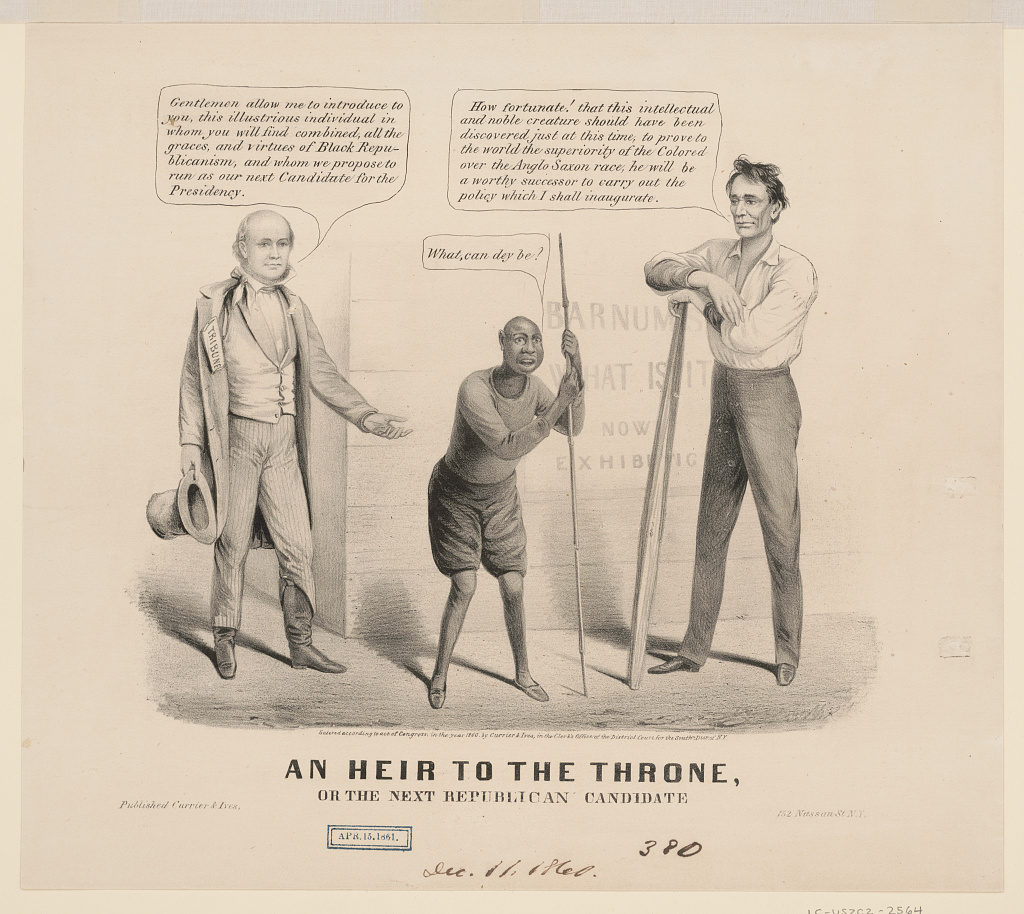
Published by Currier & Ives, c1860.

Their perceptions of how extreme and radical the other side were is evident in cartoons like this. They attempted to paint the Republican party as completely anti-slavery and extremely sympathetic to blacks which simply wasn’t the case. Anything besides the enslavement of black people in this country was unacceptable to the white population. These viewpoints were carried on into the Civil War and throughout Reconstruction. The Election of 1876 was another controversy that proved the nation was not ready for egalitarian voting. As the black population became involved in voting and even getting to some public offices, there was disproportionate blowback soon after the Civil War. Autonomy for blacks wasn’t as important to Rutherford B. Hayes as securing his election victory. Even though the 13th, 14th and 15th Amendments were passed in the previous decade, the Ku Klux Klan and many others committed horrible violence to keep the newly enfranchised blacks out. This didn’t completely prevent their involvement in politics because many were willing to fight for their constitutional right. The election of Hayes, however, was the nail in the coffin for this population and their autonomy wasn’t fully realized until around a century later.

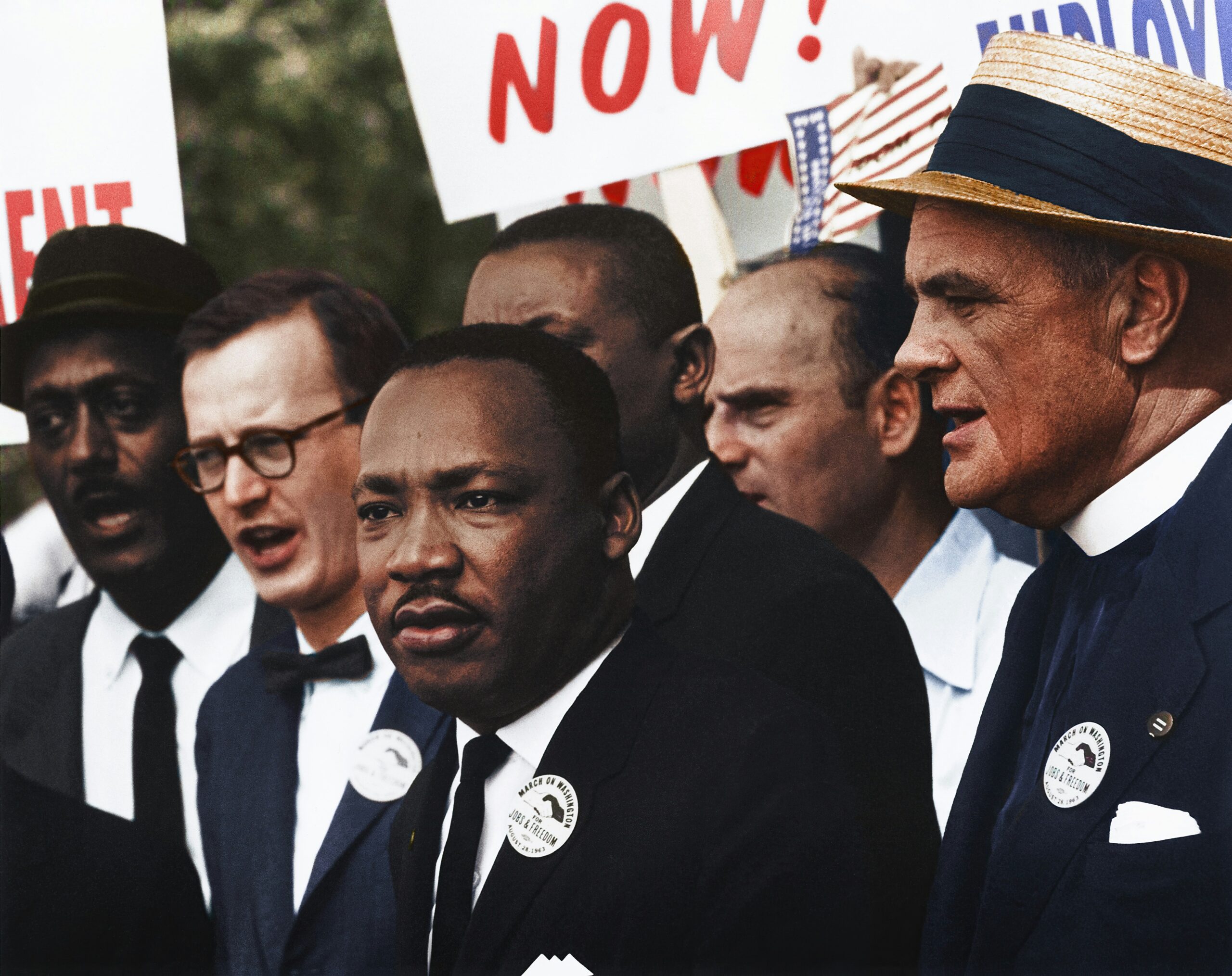
Dr. Martin Luther King, Jr. by Rowland Scherman and Jordan J. Lloyd.

The fact that many had to fight their whole lives to attempt to overcome adversity to even get the legal right to vote should inspire you to cast your ballot without hardship. 

The Supreme Court’s Crescendo of Control

America was built on the idea that one branch of the government should not have too much power. The Presidential election between George W. Bush and Al Gore showed that the Supreme Court has the ability to overstep that boundary. This election was so close and it depended on some debates in a few states, but Florida was the main focus. Florida was the difference between winning and losing for these candidates, and that showed when Al Gore planned to concede after he thought he lost Florida. After he found out reporting was incorrect he found this second wind, and Gore planned to fully fight for his chance to become President. 


As mentioned before, the Supreme Court had other ideas. In Florida, the difference between votes was so small that a recount was mandated by the Florida Election Code. The margin of error in this election was evident and something so minuscule like problems with the physical ballot completely changed the results of the election. This ballot was later coined the butterfly ballot and the victor from this scandal was George W. Bush through the proxy of Pat Buchanan. The ballot was set up so that each candidate was on either side of the ticket with the place to punch a hole in the middle. The Democrats naively agreed to this format which ended up costing them the election. Another one of their mistakes was the emphasis they put on the need to recount in certain counties that would favor them. They did this for practicality’s sake and to speed the process up, but the Supreme Court would make their decision based on similar principles. 


The Supreme Court stepped in and decided that the Florida Supreme Court was handling the recount improperly. The Supreme Court said that the ballots were not treated the same under the equal protection clause from the 14th Amendment. Since the Gore camp picked specific counties and the Florida Supreme Court allowed differential interpretations of undervotes, the Supreme Court said this recount was unconstitutional. It was still evident that there was something wrong and the results were unclear, but the court did nothing to facilitate a fair and full recount because they didn’t find it practical. The time concerns of the election were certainly on the minds of the justices just like in 1876 when a winner wasn’t decided until the last moment. It seemed that in this scenario the court decided this election because they didn’t want the uncertainty to continue. The Supreme Court’s decision to overrule democracy and determine the winner in the executive branch during the 21st century was an important signifier of the shift of power in this country.  

People Worth Fighting For

The Election of 1876 was a wake up call for the recently freed Black population in America. The symbolism of the election also shed light on what was to come in the next century. When looking at the time period 1850-1950, the period of Reconstruction clearly wasn’t the norm for African Americans. Reconstruction had its ups and downs, but overall the opportunities allotted to these people were exponential when considering that they legally didn’t count as a full person in the years prior. Some new citizens of the United States even made it to government positions in the military occupied South. The tokenism fallacy was clearly in play as Southern whites figured out how to restore the old order. Their first true opportunity was through this vital election. 


The Southern Democrats tried to return to this order by suppressing the black vote through incredible measures of violence. It was obvious this was the case, and the tampering did not go unnoticed. Although it appeared Samuel Tilden won the electoral and popular vote, the contentions about the validity for the result were brought up by many of the state legislatures. Because of this, an unprecedented solution came in the form of the Electoral Commission. Rutherford B. Hayes ended up winning the election, but on the condition enforced by the Democrats that the military was to be removed from Southern States.  

The legacy of Rutherford B. Hayes will always be attached to this election and the end of Reconstruction. This might even be a little unfair, as he was partially ahead of his time before the Civil War. It wasn’t popular to be an abolitionist around the 1850’s, but Hayes was a strong defender of African American Rights. The fact that someone who’s morals were incredible at a time they didn’t need to be was impressive. Hayes didn’t even think that the removal of troops would have such an effect and that the Black population might even continue to thrive. At this time, Black rights in America needed to be actively fought for and this theme has repeated throughout the history of the country. This was impossible with the lame duck Senate at the time which stunted Hayes’ ability to create change. The change that did end up happening was the return of African Americans being sub-citizen. It seems as incrementally as more and more progress happens for African Americans in the United States, there are always reminders that their identity is one of the most vulnerable and needs to be fought for.

The Consequential Election of 1860 and the Lies that Followed

Although powerful figures might have attempted to rewrite history over the past 150 years, the concern of the Election of 1860 and secession was clearly slavery. The Lost Cause Movement in the South was extremely powerful and retrospectively blurred the lines of the truth so far that common knowledge was questioned. The fact that anyone could believe that slavery was not the main cause of the war is a testament to their incredible propaganda soon after the Civil War. 

The political landscape during 1860 was extremely volatile which resulted in clear sectionalism. For the South, the problem of slavery worked hand and hand with their pride and politics. Because of this, they couldn’t support Stephen A. Douglas who believed in popular sovereignty. It was clear that the Democratic party needed to split up, because the disputes were regional and nothing more. With the Democrats severed into the North versus the South, it was evident more conflict was on the way. The 15 years before this election, there was a constant need for political compromise and this election was the hay that broke the camel’s back. The red carpet was laid out for the Republican candidate, Abraham Lincoln. 

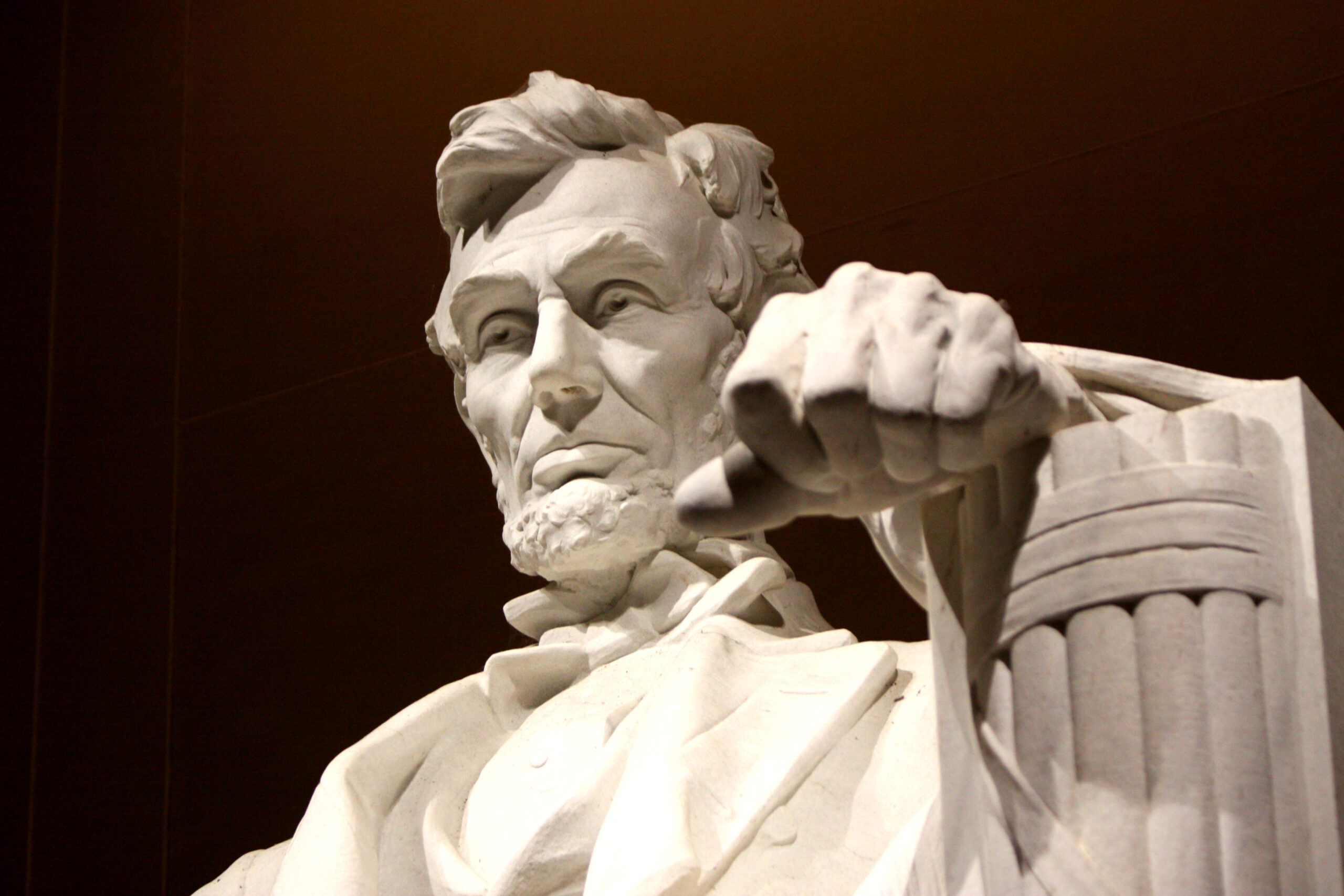
Abraham Lincoln Memorial, courtesy of Gage Skidmore.

This election was the most consequential in US history considering 11 states removed themselves from the Nation as a result. Lincoln was the clear front-runner because of his moderate stance on most topics. For the topic of slavery, he appealed to Northern sentiment that it is immoral and needs to be phased out of the country. He explained his free soil perspective at the Republican National Convention, “the new dogma that the Constitution, of its own force, carries Slavery into any or all of the Territories of the United States, is a dangerous political heresy”(May 18, 1860). He didn’t completely appeal to Abolitionists however, because of the continued racist sentiment the Republican party had but a Free Soil candidate was a better option than a popular sovereignty candidate. Even with such a moderate view on slavery, he didn’t win a single Southern state. For the most part, they preferred the Southern Democrat, John C. Breckinridge. After Lincoln won the election, It was clear that vehemently pro-slavery views of the South would not be realized. 

South Carolina was the first state to take action, and she cited many ideological reasons for secession but once again the main issue was slavery. In the “Declaration of the Immediate Causes Which Induce and Justify the Secession of South Carolina from the Federal Union”, legislators mentioned the Articles of Confederation which showed their desire for stronger state power. The reason they wanted state power was to control the institution of slavery in their way because, “an increasing hostility on the part of the non-slaveholding States to the institution of slavery, has led to a disregard of their obligations”(December 24, 1860). In the Declaration, they even mentioned that the tensions built over the past 25 years but now they finally believe their system was under threat. If the argument that secession and the Civil War arises was for any reason but slavery, one can now understand how far from the truth this is. As the most consequential election in US history, it is vital to comprehend the true reasoning for the North and South’s decisions. 

The 2024 Election Might Seem Contentious, but 1800 was Worse

Sometimes it feels like American politics are in the worst state they have ever been, but in 1800 the problems they faced were unfathomable. The issues faced stemmed from the 1796 Election of Thomas Jefferson and Aaron Burr versus John Adams and Charles Pinckney, but the rematch in 1800 replicated the issues and made them worse. Even with George Washington’s warning against political parties, they were quickly evolving into what we know them to be today. The party lines were drawn, and there was intraparty and interparty turmoil boiling up until the election. 

Nowadays, the Electoral College is a point of contention, but the whole electoral system was functioning improperly as soon as there wasn’t a universal choice like Washington. In the Election of 1800, there were 4 leading candidates from two different parties and none of them reached the required majority to be elected President. There was no distinction between votes for President or Vice-President, and the candidate with the second amount of votes became Vice-President. Because no candidate got the majority of votes, the election went to the lame-duck House of Representatives. The choice for the tie-breaker was between the two Democratic-Republicans, Burr and Jefferson. The Democratic-Republican issue was that Burr didn’t specify that the House of Representatives should vote Jefferson for President and many speculate that Burr wanted to take the glory of the Presidency for himself.

Because of this, the Federalists in the House of Representatives had the option of disrupting the opposition by electing Burr, the Vice-Presidential candidate as President. A letter from Alexander Hamilton to Harrison Gray Otis, a fellow Federalist on December 23rd, 1800, was a perfect representation of the problems in this election. Two of the main points in the letter that Hamilton brought up were that, “Mr. Jefferson is respectably known in Europe” and “Mr. Burr, as I believe, a bankrupt beyond redemption”. In the letter, Hamilton laid out the situation as two bad choices, but he believed Jefferson was the better choice for President. Although Hamilton disagreed with Jefferson’s foreign policy, specific to France, he still had respect for him and knew that Europe did too. He believed that Jefferson had his own beliefs because of his conviction in himself, which was the opposite of how he viewed Burr. He thought Burr’s opinions could be changed with ease as his only goal was monetary gain. On the flip side, Jefferson believed that Federalists were attempting to uproot everything that the Nation believed in and return to a monarchical ruling. The fact that the House of Representatives had so much power over the fate of the Presidency in this situation was a fault of the system.

Jefferson was eventually elected by the House of Representatives, but the electoral system had to be changed afterwards. This election revealed the awkward nature of the system because of the development of party systems and the lack of distinction between Presidential candidates and Vice-Presidential candidates. Originally it was thought that the two best candidates should be President and Vice-President, but the party system wouldn’t allow this. The problems of the Election of 1800 were so consequential, it was coined the Revolution of 1800. After the national complications, the 12th Amendment was quickly ratified which attempted to solve the problems from the election. 

css.php
The views and opinions expressed on individual web pages are strictly those of their authors and are not official statements of Grinnell College. Copyright Statement.