Grinnell College Logo

Contested U.S. Presidential Elections (Fall 2024)

HIS 295, Professor Sarah J. Purcell

Page 7 of 10

The Threat of Disunity: Exploitation, Consequences, and Responses

The polarization of political parties has seemingly transformed U.S. politics into a binary of subjective lesser evils. You see this manifested in catchphrases such as, “Vote Blue No Matter Who,” which serve to reinforce this fear-based electoral tactic. Polarization-focused voting schemes have been largely criticized in the past years alone, but their history provides an important lens for analyzing how party disunity affects electoral trends and creates repercussions varying from widespread dissent to acts of treason.

Ye Olde Disagreements and Divide

In the election of 1860, Republicans faced a crisis as party fractures occurred around the issue of slavery. The RNC candidate, Abraham Lincoln, campaigned on ending the emigration of enslaved people, which caused him to face immense backlash from the Democratic party. The issue became warped through a large game of newspaper telephone, ultimately framing Republicans as a pro-abolitionist party. This perceived threat against the commercial backbone of the South caused Democrats to fracture into several groups with varying viewpoints surrounding the institution of slavery.

The Democratic party, headed by Stephen A. Douglas, maintained their position against Lincoln but were seen by their constituents as insufficiently committed to the pro-slavery cause. As a result, groups such as the Southern Democratic Party popped up with campaigns driven by the preservation of slavery. Other groups, like the Constitutional Union, had similar opinions to the Southern Democrats but differed based on opinions surrounding secession.

While the Democrats quibbled in a corner over partisan issues, Republicans organized and mobilized to garner voters for the election. Republicans used every campaign method possible; they brought out notable speakers to sway opinion, published endorsements throughout Northern states, targeted and translated speeches to German immigrant voters, and utilized grass-roots organizations—such as the Wide Awakes—to target young voters. In contrast, Democrats pushed the easily disproved Republican abolitionism lie, yet did not make nearly the same effort to organize voters throughout their various party offshoots. Republicans’ unity against the Democrats allowed them to successfully gain enough electoral support from the split faction votes of Southern states. As a result, immense resentment burst from the Democrat-aligned parties, and, feeling unfoundedly threatened by the dissolution of slavery, some states decided to break from the union in opposition. Secession, the first step in protest against Lincoln’s election, underpinned the escalation that soon caused the Civil War.

Building Dissent Through Absurdity

Lincoln’s battle against the Democratic-aligned parties resonates closely with many recent elections, even down to the same campaign issues stemming from white supremacy.  Perhaps the most poignant example of unintentional disunity is the 2016 election, which saw an ideological divide spanning over Democratic socialist Bernie Sanders, Democrat Hilary Clinton, and various other third parties (i.e. Jill Stein, Gary Johnson, etc). As Sanders increasingly voiced his criticisms of Clinton’s policies—amplified greatly by the media—she responded by acquiescing to herd over potential Dem voters in Sanders’ base. Her email controversy served as the pallbearer, cementing the divides across partisan lines. On the other hand, Republicans, less divided than Dems, doubled down on supporting Trump and were resolved to campaign a solid and unchanging message to target evangelicals, their core voter base, along with coordinating various behind-the-scenes deals regarding Supreme court nominations,  reminiscent of a “corrupt bargain.” Intentional or not, Democrat disunity combined with Republican scheming and campaigning hurt Clinton’s voter base enough that she lost the electoral vote by a record-breaking 5 faithless electors.

Clinton’s loss is regarded as the catalyst for Trump’s, along with the larger conservative hive’s, ascension to power. However, eight years later, Trump’s popularity is not nearly the same level as it was during his inauguration. Inundated and shrouded in back-to-back scandals, the officials and the public alike have grown tired of Trump’s antics, ironically, with the same party dis-junction he exploited in 2016 coming back to bite him. His relentless attacks aimed at deposing fellow Republicans have jaded party members, and his insistence on spewing outrageous soundbites has greatly diminished his public credibility. It is in this environment that Kamala Harris’ united front of Democratic voters and organizations poses a large threat to the disillusioned and fractured Republicans.

In response to actualized and potential election losses, there are clear, direct parallels regarding Trump supporters who call for secession or preparation for an imaginary civil war, along with more sinister allusions towards a complete revolution. The consequences of another Trump loss have an unsettling unpredictability; his previous loss incited treason, which only strengthened his most radical counterparts. There’s no telling what the next course of action is for a group that has no issue committing blatant seditious acts against the United States.


Sources

Charles Homans, (November 10, 2022): The Right Wing Grassroots Scored Big in 2010. But 2022 Was Far Different.

Frank Newport, (July 17, 2020): What We Learned from the People in the 2016 Election

William A. Galston, (January 20, 2023): The polarization paradox:  Elected officials and voters have shifted in opposite directions 

Hannah Fingerhut, (November 2, 2016): How Republicans see the GOP on the eve of the 2016 election

Adam I. P. Smith, Chapter 3, (2015): America at the Ballot Box: Elections and Political History

The Demonizing Racial Rhetoric of 1860–Wait, 2024?

While the times were much different, many parallels can be drawn between the elections of 1860 and 2024. One of the starkest such comparisons is the rhetoric among certain politicians regarding racial minority groups. Sally Heizel writes in the Journal of the Illinois State Historical Society how many people, such as Illinois senator Trumbull, were in opposition to the expansion of slavery but only out of a desire to prevent Black people from getting land that they believed should be given to white men. Specifically, antebellum Illinois Republicans opposed the free movement of Black people within the country

Just like in 1860, modern Republicans are opposing the free movement of Black people legally in the United States. The most timely and pertinent example of this is the recent events in Springfield, Ohio, where Haitian immigrants, legally in the U.S., are being falsely accused by the Republican Presidential and Vice Presidential nominees of being illegally in the country, stealing the jobs of locals, and eating people’s pets. This rhetoric, intended to sway national opinion in favor of stricter laws regarding immigration, is based on falsities, as was even admitted by Vice Presidential nominee JD Vance. However, it can still serve its purpose, as many took the implicit call to action and issued dozens of bomb threats that shut down schools and government buildings across Springfield, with some threats even being targeted specifically at the Haitian community. Some Haitians in the community have even had to consider moving, the ultimate goal of this strategy of 19th century racism.

Further similarities between the racial rhetoric of 1860 and 2024 can be seen by the use of false racial descriptors. In 1860, the Democrats called their opponents “Black Republicans”, among other, more vulgar terms, meant to negatively portray them as beholden by the supposed interests of Black people. Meanwhile, in 2024, The Republican presidential nominee frequently uses the term ‘Palestinian’ as a slur against his opponents he sees as too favorable towards Palestinian rights.

These ties between the rhetoric of the 1860s and 2020s illustrate the deeply fragile environment we live in today, as this rhetoric in the 1860s was a prelude to one of the deadliest race-centered conflicts in world history, and was at a time before the Constitution even recognized the rights of racial minorities to vote. While this is deeply concerning, hope is not lost, and if people can manage to fight off racial hatred in our country we can avoid the worst.

A battle for the soul of the country

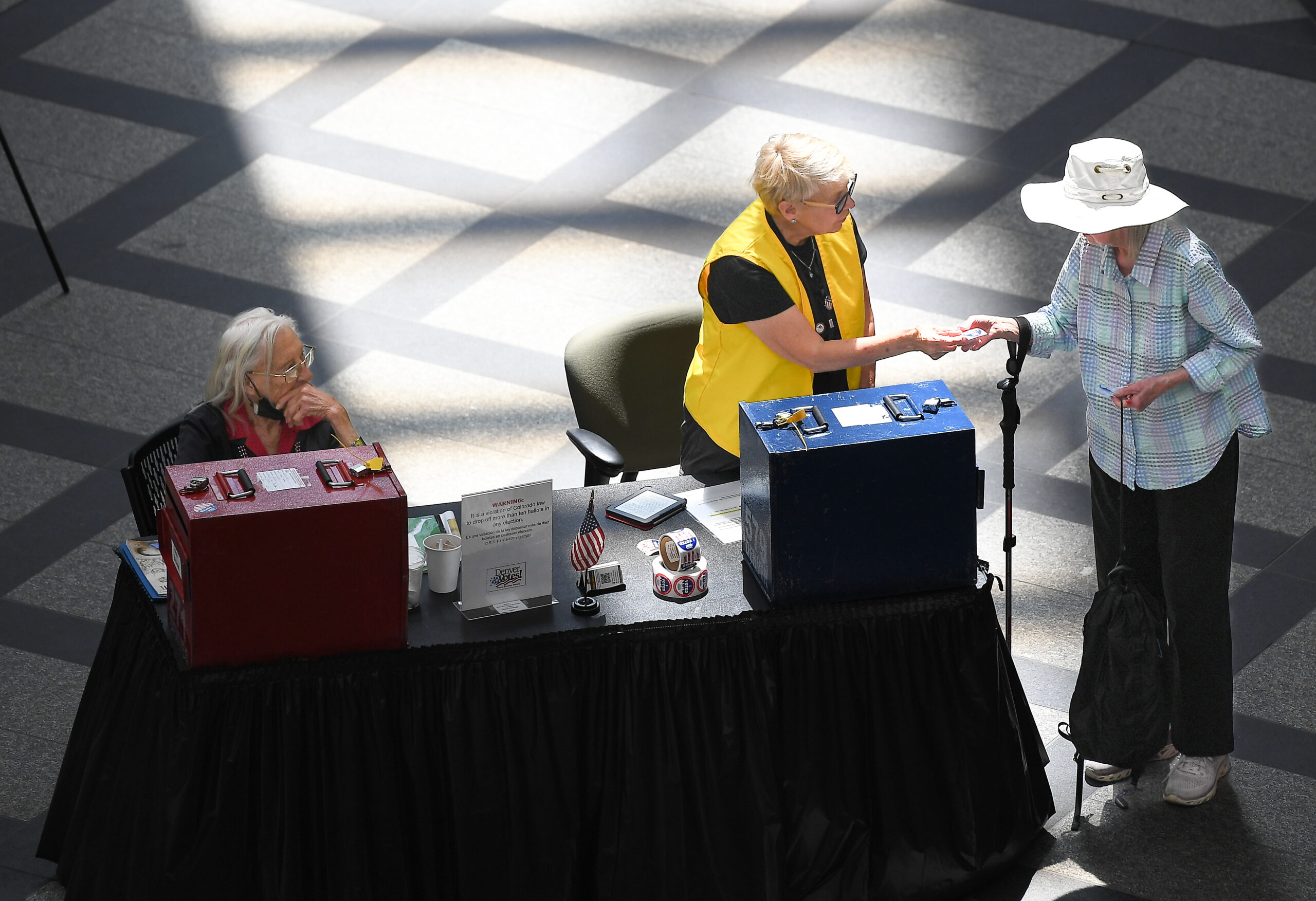
A woman receives a sticker from an election worker after submitting her ballot. (Photo by Zach S.)

America currently faces an existential question about race that is eerily similar to the question that drove it to civil war: Will race — and with it, racism — define our politics? The answer, in the form of which candidate prevails in November, will likely determine the trajectory of race in politics. But the foreboding lesson of 1860 is that even when the more unifying candidate wins, the country can fracture.

There are meaningful parallels to draw between the upcoming election and the election of 1860, many of which offer bleak warnings about the harms of political division. The election of 1860 was one of the most formative in American history, a flashpoint in the nation’s struggle with slavery, state sovereignty, and national identity. It was also the election that catalyzed secession and civil war. While the fundamental issues of today have shifted in tone, the underlying dynamics of fear-mongering, racial resentment, and existential questions about national identity are still driving the upcoming election, much like they did in 1860.

The Return of Existential Questions on Race

In 1860, the question of slavery — both its expansion and its moral status — dominated national discourse. The South’s economic system was deeply tied to slavery, and as historian Michael Burlingame details, many white Southerners believed their livelihoods were under threat from Northern abolitionist forces. In turn, Abraham Lincoln, who opposed the expansion of slavery, was considered an existential threat to the South, and his election contributed to the secessionist movement that sparked the Civil War.

In 2024, America is again caught up in existential questions about race, though the focus has shifted. Racial resentment has returned to the forefront of political discourse, fueled by debates over immigration, diversity, equity, and inclusion (DEI) programs, and the legacy of systemic racism. Modern Republicans, in a manner that mirrors pro-slavery forces of the 1860s, are increasingly framing these issues as threats to the nation’s identity.

Just as the South believed the abolition of slavery would destroy their way of life, many modern conservatives fear increasing racial diversity will upend the fabric of America. In this way, both elections involved exaggerated fears about race that reveal deeper anxieties about societal transformation.

Divisive Rhetoric and Fear-Mongering

According to most accounts, the campaign cycle leading up to the 2024 election has been particularly ugly. Candidates are name-calling. Lying. Belittling. You name it. Donald Trump proved in 2016 that the costs of negative campaigning may not be as steep as previously thought, and both candidates seem to be taking that finding to heart in their recent campaign approaches. Similar to 1860, fear-mongering by candidates has dramatically shaped the political landscape. In 1860, pro-slavery politicians in the South argued that the election of Lincoln would lead to the abolition of slavery and economic collapse. This fear-mongering — backed more by rhetoric than evidence — created a mentality among many white Southerners that their survival depended on breaking from the Union. As historian Adam Smith argues, it didn’t matter that Lincoln had only promised to halt the spread of slavery, not abolish it outright; the perception of threat was enough to fracture the country.

Similar patterns are emerging in 2024. Republican politicians frequently invoke the dangers of immigration and DEI as existential threats to the American way of life. We’re made to believe our country is being flooded by dangerous immigrants who are taking jobs, committing crimes, and threatening national security. All the while, DEI initiatives are portrayed as radical policies that undermine American values by enforcing “woke” ideologies that divide the nation. If you believe in diversity, you may be labeled as unpatriotic. When anti-immigration candidates win, the election may be deemed rigged.

Yet the evidence simply isn’t there. These modern concerns about race are built on exaggerated claims rather than genuine evidence, just as was the case in 1860. In fact, the evidence says the opposite. Immigration is beneficial to the economy and cultural awareness. DEI does reduce racial inequalities. Despite this, it’s the rhetoric that matters — the rhetoric continues to fan the flames of fear, widening the polarization crack that seems closer to becoming a chasm every day.

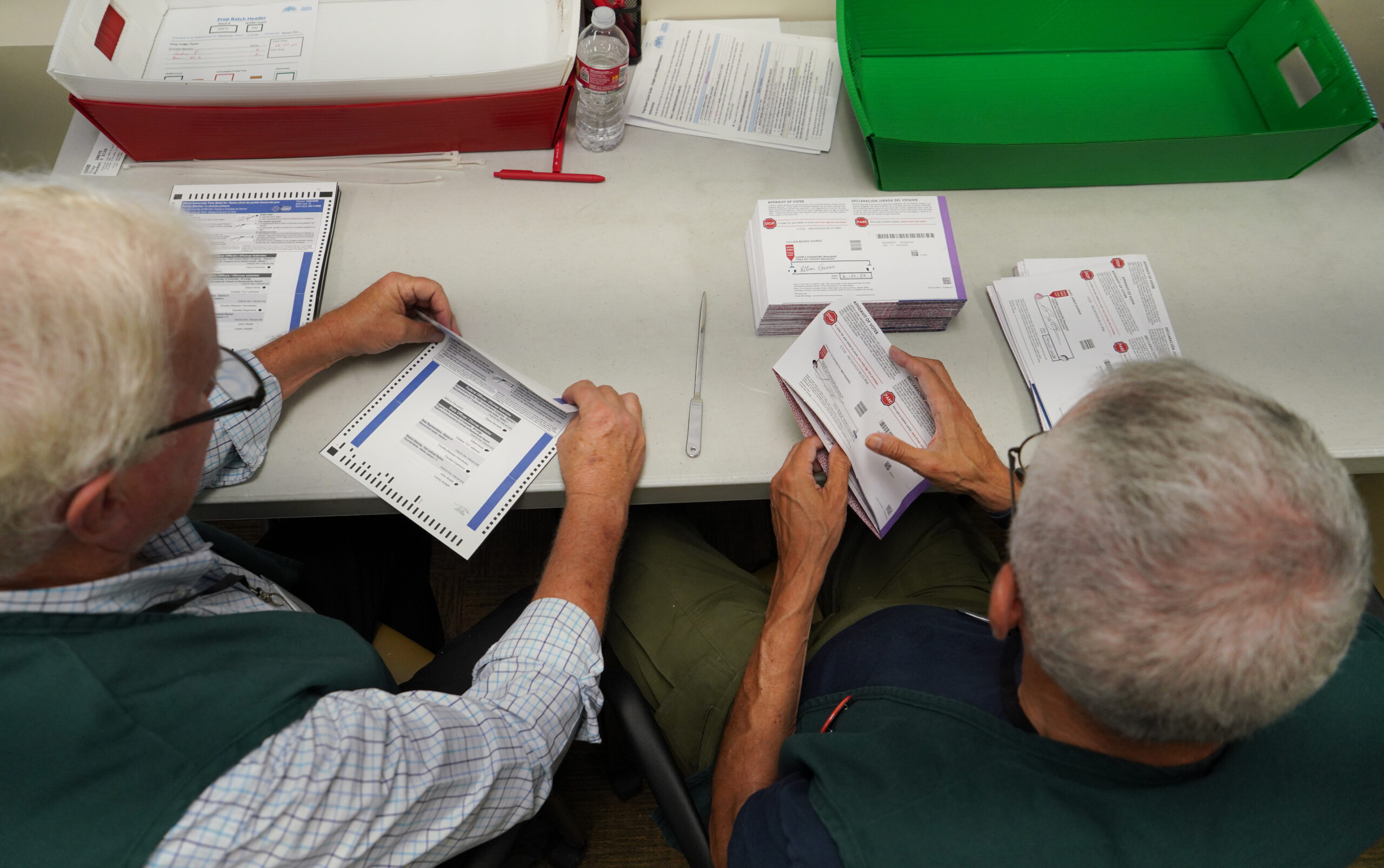
Ballot officials open mail-in ballots. (Photo by Zach S.)

Where do we go from here?

The election of 1860 ultimately led to the Civil War — the bloodiest conflict in American history. Deep divisions over slavery proved too great to be settled through political means, and violence grew out of this division. There has been no clearer example of the danger of fear and resentment.

So what makes 2024 any different? You would be hard pressed to find a historian who thinks a comparable civil war is on the horizon, but the potential for societal fracture is real. Political violence is not a thing of the past, as the recent assassination attempts on Trump and attack on Paul Pelosi reveal. The January 6th insurrection at the Capitol is another reminder that the effects of increasing polarization can cause bloodshed. As in 1860, fear-based narratives around race and identity — if left unchecked — could lead to a crisis point where political solutions are no longer viable.

The onus for change likely falls on a number of entities. For one, it is the candidates themselves. They have the attention and therefore set the talking points. But it is also the political parties that prop up the candidates and determine who is given a platform. It’s also the media, and the platform they choose to provide or take away based on the veracity of claims. Ultimately, though, in our enduring democratic country, the power resides in voters. Until a true unity candidate climbs the ranks, it seems likely the country will continue to teeter on the brink of fracture. And if history tells us anything, the hard part is not the fracture. It is the recovery.

Thousands of Tents, One Union: Coalition Building in Politics

Senator Stephen A. Douglas would enter the northern convention in Charleston as the political favorite for the presidential nomination. Douglas, a historic foe to Lincoln, would be the main competitor in the North. Held in the soon-to-be-seceded state of South Carolina, the primary would fail to select a candidate. Still, a second convention would send Douglas to challenge the Republican candidate (alongside a cast of other characters) Abraham Lincoln in the election of 1860.

Lincoln would go on to be elected president in 1860 and immediately face the looming crisis of secession. In his inaugural address (which can be accessed here) he simplified the real divide that America faced, “One section of our country believes slavery is right and ought to be extended, while the other believes it is wrong and ought not to be extended. This is the only substantial dispute”.  The core issue of slavery dividing the nation took precedence over other divides and led to secession. The South, alienated by Lincoln’s rhetoric that challenged their ideological and economic commitment to slavery, would go on to form the Confederacy and threaten the survival of the Union.

The division between secessionists and anti-secessionists defined the political climate and created coalitions.  The broad coalitions built up from (real or perceived) existential threats are common today in big-tent politics. Douglas, who fiercely campaigned against Lincoln and historically disagreed with him, would go on to campaign against secession and speak positively of Lincoln’s inaugural address. Similarly, Samarth Desai in “Jackson Redivivus” presents the case that the anti-secessionist tent unites the contrasting presidencies of Lincoln and Jackson.  Jackson’s rhetoric and ideas in the “nullification proclamation”  would be woven into Lincoln’s address and response. In their rejection of secession, Lincoln and Jackson’s contrasting presidencies fit squarely inside the anti-secessionist coalition.

In modern politics, candidates often drop from primaries to unify behind a broader coalition, as seen in 2020 when Biden became the consensus candidate. Partisan differences are also set aside in defense of fundamental principles displayed by Dick Cheney endorsing Kamala Harris. The diverse figures in today’s “anti-MAGA” coalition showcase how (a perception of) existential threats to democracy can unite disparate groups. 

In 1860, the threat to the Union brought together unlikely allies like Lincoln and Douglas to unite under the banner of preserving the Union. Just as the Democratic Party today embodies big-tent politics, unitizing various factions to defend democracy, the struggle over the Union in the 1860s showed how fundamental values can bridge ideological divides. Both then and now, political coalitions expand when the stakes rise beyond partisan politics to the survival of the system itself.


Sources:

Desai, S. P., (2022) “”Jackson Redivivus” in Lincoln’s First Inaugural”, The Journal of the Abraham Lincoln Association43(1): 3. doi: https://doi.org/10.3998/jala.2751

Lincoln, Abraham. Abraham Lincoln papers: Series 1. General Correspondence. -1916: Abraham Lincoln, March 1861 First Inaugural Address, Final Version. March, 1861. Manuscript/Mixed Material. Retrieved from the Library of Congress, <www.loc.gov/item/mal0773800/>.

The Election of 2024 is Unprecedented, but is it More Complicated than the Election of 1860?

The Election of 1860 is often remembered for electing Abraham Lincoln to the Presidency and conditions that led to the Civil War, but there is a lot more you should know. Did you know that there were four candidates from four parties? Do you know that both the Democratic and Republican candidates were from the same state? What about the results of the election, did you know that the second most popular candidate won the electoral college in only one state?

The first thing that everyone should know is that divides between the South and North led to fracturing within political parties, especially within the democratic party.

Thankfully, in 2024, both major parties elected candidates by the end of their convention, even if the process was different than it has been in the past. In 1860, that wasn’t the case. The Republican Party elected Abraham Lincoln at their convention with little argument, but the Democratic Party on the other hand failed to elect a candidate at their first convention.

Eventually, the Democratic Party elected Stephen Douglas, but the party remained split on the topic of slavery, and two new parties formed. The new pro-slavery Southern Democratic Party elected John C. Breckinridge (the Vice President at the time) and the Constitutional Union Party (who avoided the topic of slavery), elected John Bell. In the end, the election became a race between Lincoln and Douglas in the North with the complication of Breckinridge taking away a few votes in the South.

The fact that there were four candidates is already weird, but somehow two of them were from the same state. Interestingly, Lincoln and Douglas were both from Illinois and served in state legislature together. Can you imagine a world where Donald Trump and Kamala Harris served in the same state legislature or even as representatives from the same state?

Today, it seems hard to imagine two presidential candidates being from the same state, but technically, Hillary Clinton and Donald Trump both claimed residency in New York in 2016. Before the 2016 election, two major party candidates hadn’t claimed residency in the same state since 1944.


Maybe it isn’t all that interesting that Douglas and Lincoln were from the same state, but what is interesting is the outcome of the election. As seen in the 1860 electoral college map, Lincoln won both the popular vote and Electoral College, carrying 18 northern states, and 1.8 million votes. Douglas on the other hand carried only one state, yet still accounted for a total of 1.3 million votes. To complicate the results further, Breckinridge and Bell both carried more states than Douglas but received considerably fewer votes.

All in all, the upcoming election may be unprecedented, but at least it isn’t as complicated as the election of 1860.

Deadly Consequences of Fear Mongering in Historical Context

When learning about the Civil War, whether in class or somewhere else, I feel like most of us just skip to the beginning, that being either the attack on Fort Sumter or the Battle of Manassas. However, there is always what comes before the beginning that pushes a country that is recently divided into something more serious. There are some interesting connections between the United States now and in 1860, especially given how much of the U.S. population believes that a second civil war is a possibility. That is why we should look back at this election and the political atmosphere that existed then.

The 1860 presidential election was really the beginning of a new political landscape in the U.S., the start of a new two party system. The Democrats were the established party at the time, controlling the White House with incumbent president James Buchanan and before him Franklin Pierce, their strength located in the South from slave states and immigrants. Following this, the new face on the political stage was the Republican party, fresh from their first election with a presidential candidate in 1856, John C. Fremont. The Republicans had less of an established background compared to the Democrats and needed to rely on former party groups such as Whigs, the party that challenged the Democrats from the 1830s to the 1850s, but ultimately folded due to infighting over slavery. There were also the “Know Nothings” or the American Party whose appeal rested on anti-immigrant policies and on “Free Soil” party members who opposed expansion of slavery in the west. Things would get more interesting at the Democratic convention in Charleston. The party would fracture when trying to nominate Stephen Douglas, and would fail to add a federal slave code for territories plank to their campaign. The Democrats would try to reconvene in Baltimore unsuccessfully, tearing the party in two, the Democrats running Stephen Douglas in the north and southern Democrats supporting the Vice-President, John C. Breckenridge.

 The Republicans would also be split between moderates who supported Abraham Lincoln and the more left leaning William H. Seward. Unlike the Democrats, the Republicans were able to stay united and nominate Lincoln. But I’m not finished yet! There was a fourth candidate, John Bell, a moderate running on the “Constitutional Union” supporting preservation of the union and swaying Southerners who disagreed with Republicans but didn’t want to leave the Union either.

As with current politics, it seems almost anything could set our world on fire even if we don’t want to increase hostility and distrust. This is where we meet our link from the fragmented election to the spark of the Civil War or at least we can get some perspective on our current situation. The “Wide Awakes” was a Republican political group of young men who would march in cities and states for Lincoln and Republican candidates. I know what you’re thinking, they don’t sound too bad but the problem was they did it in a very militaristic style. This frightened many Southerners which fed their fears of losing a grip on power and this fear would also help to transform the election into a powder keg. We can also see how the “Orange Marches” in Northern Ireland caused and continue to cause division. Fear sometimes seems to push groups into paramilitary activity which in turn, causes more fear, leading to a deadly spiral of fear and hate.

I don’t think most of us realize the importance of this election to the Civil War. It was the accumulation of decades of political fighting and maneuvering that created a perfect storm of emotion. The result was the bloodiest war in American history. What we should remember today, is that we need to be very careful when we provoke the other side during election time, or trying to buy into their fears. Marching and mass mobilization and acting like a paramilitary organization like the Proud Boys and or the OrangeMen in Northern Ireland might do more harm than good. Instead of helping their cause, it hurts them.


Reference list:


http://www.jstor.org/stable/25622297


https://millercenter.org/president/lincoln/campaigns-and-elections


https://www.bbc.com/news/uk-northern-ireland-66102199


The Consequential Election of 1860 and the Lies that Followed

Although powerful figures might have attempted to rewrite history over the past 150 years, the concern of the Election of 1860 and secession was clearly slavery. The Lost Cause Movement in the South was extremely powerful and retrospectively blurred the lines of the truth so far that common knowledge was questioned. The fact that anyone could believe that slavery was not the main cause of the war is a testament to their incredible propaganda soon after the Civil War. 

The political landscape during 1860 was extremely volatile which resulted in clear sectionalism. For the South, the problem of slavery worked hand and hand with their pride and politics. Because of this, they couldn’t support Stephen A. Douglas who believed in popular sovereignty. It was clear that the Democratic party needed to split up, because the disputes were regional and nothing more. With the Democrats severed into the North versus the South, it was evident more conflict was on the way. The 15 years before this election, there was a constant need for political compromise and this election was the hay that broke the camel’s back. The red carpet was laid out for the Republican candidate, Abraham Lincoln. 

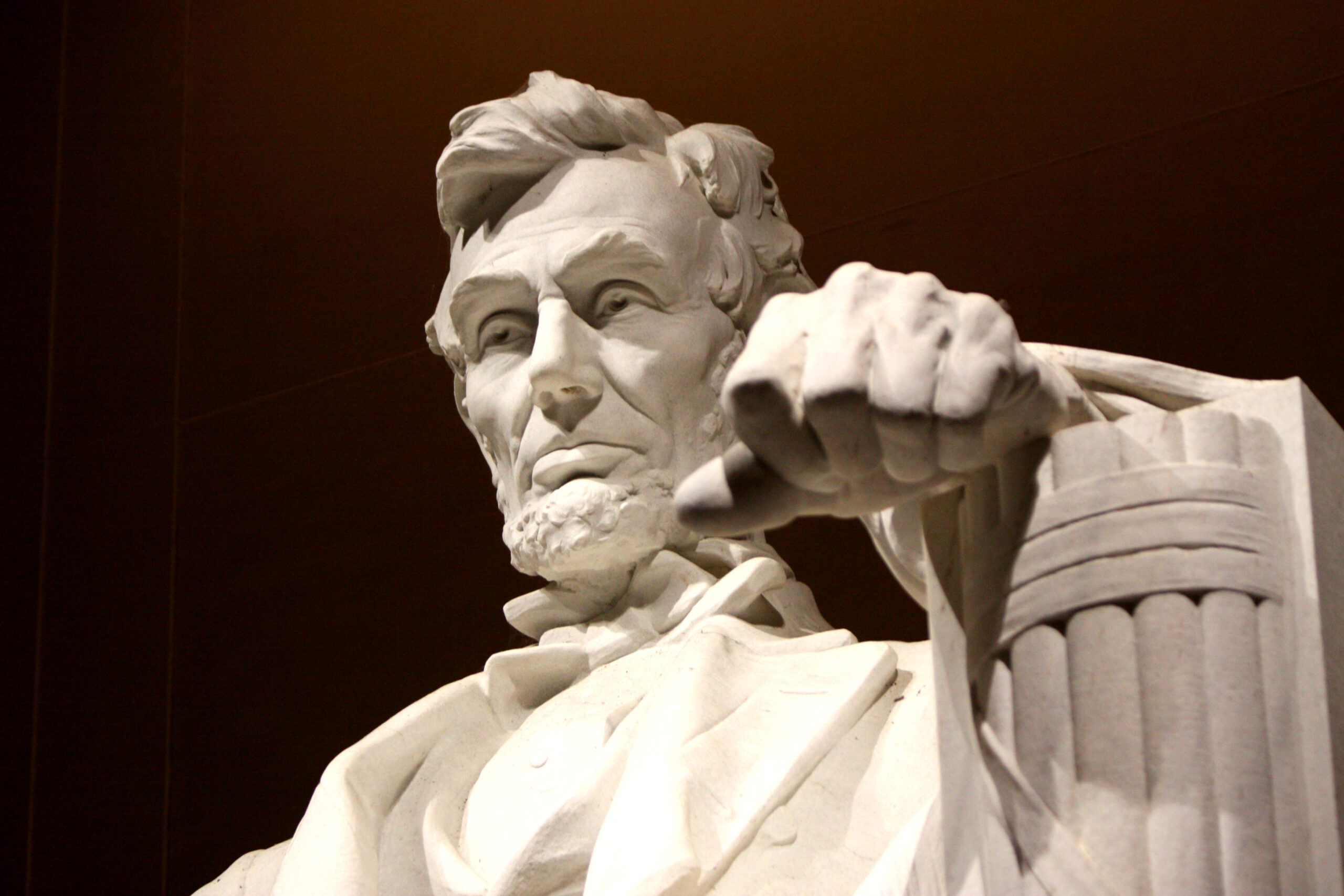
Abraham Lincoln Memorial, courtesy of Gage Skidmore.

This election was the most consequential in US history considering 11 states removed themselves from the Nation as a result. Lincoln was the clear front-runner because of his moderate stance on most topics. For the topic of slavery, he appealed to Northern sentiment that it is immoral and needs to be phased out of the country. He explained his free soil perspective at the Republican National Convention, “the new dogma that the Constitution, of its own force, carries Slavery into any or all of the Territories of the United States, is a dangerous political heresy”(May 18, 1860). He didn’t completely appeal to Abolitionists however, because of the continued racist sentiment the Republican party had but a Free Soil candidate was a better option than a popular sovereignty candidate. Even with such a moderate view on slavery, he didn’t win a single Southern state. For the most part, they preferred the Southern Democrat, John C. Breckinridge. After Lincoln won the election, It was clear that vehemently pro-slavery views of the South would not be realized. 

South Carolina was the first state to take action, and she cited many ideological reasons for secession but once again the main issue was slavery. In the “Declaration of the Immediate Causes Which Induce and Justify the Secession of South Carolina from the Federal Union”, legislators mentioned the Articles of Confederation which showed their desire for stronger state power. The reason they wanted state power was to control the institution of slavery in their way because, “an increasing hostility on the part of the non-slaveholding States to the institution of slavery, has led to a disregard of their obligations”(December 24, 1860). In the Declaration, they even mentioned that the tensions built over the past 25 years but now they finally believe their system was under threat. If the argument that secession and the Civil War arises was for any reason but slavery, one can now understand how far from the truth this is. As the most consequential election in US history, it is vital to comprehend the true reasoning for the North and South’s decisions. 

What Can Harris learn from Lincoln?

In last week’s blog post, I compared the tone of the 1800 and 2024. In these elections, candidates framed the stakes as particularly consequential. The same can be said of the election of 1860. 


In 1860, the nation’s debate around slavery had reached “a boiling point” (UVA Miller Center). The debate around slavery complicated each party’s nomination process. The Democratic convention was so heated, that the party wasn’t even able to make a decision when they initially met; debate between the Northern and Southern delegates about how the party should address slavery was too intense. When the party reconvened six weeks later, Stephen Douglas was eventually nominated. However, Southern democratic delegates were unsatisfied with this choice. These delegates would reconvene and nominate John C. Breckenridge as the Southern Democratic nominee.  


On the Republican side, the convention was also somewhat contested. Entering the convention, William H. Seward was seen as the frontrunner. However, by the third ballot, Abraham Lincoln had captured the nomination. Additionally, John Bell of the Constitutional Union party was elected.


As the campaign heated up, Lincoln was seen as a frontrunner. The divided support of the Democrats paired with the North’s views on slavery gave Lincoln a clear advantage. This perceived advantage made Lincoln the target of dramatic personal attacks. These attacks dramatized how Lincoln’s position on slavery would direct the future of the country. A secessionist in Georgia claimed Lincoln wanted to “force the inter-marriage of black and white children” (UVA Miller Center). 


In the last presidential debate, Trump similarly criticized the future a Harris presidency would create. These critiques often include racial undertones, particularly when Trump critiques Harris’ plans on immigration. 


Like Jefferson in 1800 and Lincoln in 1860, Kamala faces bold attacks against the future of America that could be created by her presidency. Lincoln seemed to follow the mentality adopted by Jefferson when he faced these attacks; he stayed calm and non combative. While it might be difficult for Kamala to appear unfazed by Trump’s attacks – especially in a modern media environment – history seems to encourage such a mentality. 


References: 

“Abraham Lincoln: Campaigns and Elections,” Michael Burlingame, https://millercenter.org/president/lincoln/campaigns-and-elections


“Harris says ‘We’re not going back!’ So did Thomas Jefferson?”, jarviser2, https://his295-fall2024.sites.grinnell.edu/week-3/harris-says-were-not-going-back-thomas-jefferson/

The Election of 1860, Voting for War?

Despite the partisan tense state of our current political landscape, all-out civil war still seems unlikely. The road to a conflict that that pits neighbor against neighbor and state against state seems unfathomable. Of course, it has happened before in American history. Those who lived up to the Civil War may have held similar notions about the unbreakable strength of the Union until it was too late. Was there online one event that made the war inevitable, that broke the country so profoundly that war was inevitable, and if so, with the advantage of hindsight, could we avoid that same trap with the current state of the Union, especially with such an influential election two months away?


Often, the start of the Civil War is seen by historians as April 12th, 1861, the day when Confederate troops fired on Fort Sumpter in South Carolina. Indeed, this first act of violence between the new confederacy and the Union started the war between these two sides. By this time, however, the southern states had already broken from the Union, a profound act of violence itself and one that made conflict inexorable. Even that, however, is not the true line from which America was unable to come back. Rather this blog suggests that the straw election that broke the camels, United States, back was the election of 1860, an election that made conflict all but inevitable.


Bell Everett Campaign Poster 1860 - PICRYL - Public Domain Media Search Engine Public Domain Search

Bell Everett Campaign Poster


The election that made Abraham Lincon the 16th president of the United States was a contentious one, not because of any misconduct in the election itself but rather because of the results, an anti-slavery republican elected president without the support of a single southern state. The words “anti-slavery” and not abolition is a purposeful one. Despite his reputation, when Lincon was elected, he was not an abolitionist; in fact, he saw abolition as just as great a threat to the Union as slavery. This didn’t bring comfort to the South. They saw the Lincons election as a shift in the political tides, a tide that would end the institution of slavery and the southern way of life. This is the moment in which the civil war truly started, in which violence became inevitable. Despite the lofty aspirations of abolitionists, it seems unlikely that slavery would have ended before the 20th century without violence. At the same time, even if the institution of slavery was not directly at risk, the southern states would not allow themselves to be governed by an executive that so fundamentally opposed their core beliefs. While it is disingenuous to claim that in voting or not voting for Lincon, Americans consciously voted for war, it is a truth that the election of 1860 was a line from which, once crossed, America was unable to recover without armed conflict. Of course, this is not to minimize the southern states’ role in escalation both by succeed from the Union and inciting violence but rather to point to how elections, even ones conducted fairly, have the power to rip nations apart.


The election of 2024 could be our could be our contemporary 1860. No matter the outcome, the election will be close. This means that millions of Americans will cast ballots for one candidate and end up with a completely different one in the white house. Duh. That’s how it always works, but like the election of 1860, each candidate has radically different views that, according to some on both sides, threaten one part or another of Americas way of life. It’s not hard to imagine how contentious issues like immigration or abortion could lead to political violence or even interstate conflict. In 2020, just as with the election of 1860, political violence wasn’t on the ballot, and yet the choices made by Americans in the polls led to the January 6th riot just the same, with some help of extremists and a former president, of course.


The past doesn’t determine the future, and no matter who wins the presidency, there are still countless ways to avoid political violence. Still, it can’t be helped, but I wonder if future historians will mark the 2024 election as the start of the second civil war.

The Dangers of Alarmist “Radical” Panic in Political Campaigns: Lessons for Today From the Election of 1860

In Presidential elections, candidates often advertise their policies as being based around the beliefs and desires of their supporters and are seen as representatives of the political party they belong to. While a given political party (e.g., “Party A”) often focuses on how the Presidential candidate chosen from Party A represents their supporters, political parties which stand in opposition to Party A (e.g., “Party B”) will often focus their “attacks” against Party A around what they believe the actions and beliefs held by the demographic of Party A’s supporters say about the “true” goals and ideals of Party A’s presidential candidate. Here is a recent example, which will hopefully make the previous sentence a little clearer:


Ahead of the 2020 Presidential election, The New York Times published an article discussing then incumbent Republican candidate Donald Trump’s allegations that the Democratic candidate, Joe Biden, held ties to “radical left” groups such as Antifa (Anti-fascists). The article went on to juxtapose the beliefs held by these “radical left” groups that Trump had associated with Biden with the actual policies, stances, and statements that the Biden/Harris campaign had provided on those beliefs. For example, one of the primary movements led by Antifa and similar groups is the movement to defund the police, a movement which Joe Biden opposes, with him evening stating that his plan for successful Police reform would require more funding to be put in to Police departments (“Biden Walks a Cautious Line as He Opposes Defunding the Police” (June 8th 2020), The New York Times,).


These kinds of confusing representations of Presidential candidates (often made by the candidate’s opposition) as being advocates for the more “radical” parts of the political party they represent, despite the candidates themselves having expressed opposition to beliefs and policies held by those “radical” parts, is nothing new; and, as you may have guessed, these sorts of misattributions of “radical” views to Presidential candidates can have rather severe consequences. One of the most significant examples of this sort of phenomenon can be seen in what was, arguably, the most significant election in the history of the United States of America: the election of 1860.


The Presidential election of 1860 was exceptionally regional, with essentially two different presidential races occurring in the Northern and Southern United States. Presidential candidates were chosen by the Republican party as well as both parties that emerged from the newly fractured Democratic party: representing the Republican party, Abraham Lincoln of Illinois; representing the Northern Democrats, Illinois Senator Stephen Douglas; and representing the Southern Democrats, incumbent Vice President John C. Breckinridge of Kentucky. Despite not being included on the ballot in any of the Southern states, Lincoln earned 180 electoral votes, with the runner-up, Breckinridge, having earned only 72 votes (The Miller Center, “Abraham Lincoln: Campaigns and Elections”, Michael Burlingame).


In his first inauguration address, Lincoln attempted to reassure an ever-anxious American South that the Federal Government, believed by many Southerners to be representing the interests of Northern states exclusively, would not bring about “bloodshed or violence” in any conflict with Southern states unless such extreme actions were “forced upon the national authority”, and that he had no intentions nor right to “interfere with the institution of slavery in the States where it exists”. However, Lincoln made it clear To ensure that there could be no misinterpretation of what sorts of events would cause a violent approach to be “forced upon the national authority”, and cleverly clarify his position on whether secession was truly possible under the constitution, Lincoln asserted his intentions to “[use] the power confided in [him as president] to hold, occupy, and possess the property and places belonging to the Government” in the case of any attempts by any group to annex any such property or places, as the Confederate States of America, would go on to do a little over a month after this inauguration address, leading to the beginning of the Civil War (First Inaugural Address of Abraham Lincoln (March 4th 1861),  Yale Law School: The Avalon Project)


While Abraham Lincoln has long been known by many as the “Great Emancipator”, his first presidential campaign was notably not based in abolitionist ideals; that is, not interested in actively dismantling the institution of slavery. He was so far removed from the abolitionist movement in 1860, that famed abolitionist and Civil Rights leader, Frederick Douglass, in an 1876 memorial address labeled Lincoln as “preeminently the white man’s President, entirely devoted to the welfare of white men” (An Oration in Memory of Abraham Lincoln (April 14th 1876), Frederick Douglass.). The Republican campaign for Lincoln’s presidency even went so far as to eagerly deny claims that their party subscribed to abolitionist ideals, publicly denounce abolitionist politicians who voiced their support for Lincoln, and attempt to frame the Democratic party as the party committed to threatening “white supremacy” due to their desire to expand the institution of slavery to new states which would therefore increasing the population of non-white enslaved peoples. Why, then, were Southerners seemingly so afraid of Abraham Lincoln’s Presidency that seven states had seceded by February 1st, 1961, remarkably soon after Lincoln’s election on November 6th, 1860 (Britannica, United States History: Secession)?


It can be difficult to find clarity as to why these Southern States felt such urgency, even if looking towards documents such as the Declaration of Secession of South Carolina, the first state to secede: which makes it clear that Lincoln’s presidency is a, if not the, primary cause for their secession, stating that in electing Lincoln, the Northern states have elected a man whose “opinions and purposes are hostile to slavery” and who has declared that “the public mind must rest in the belief that slavery is in the course of ultimate extinction”(South Carolina Declaration of Secession (1860), from the Constitution Center).


At this point, it is important to note that Southern States were not just afraid of abolitionists, but also afraid of anti-slavery politicians who, in refusing to enact slave codes which would protect Southerner’s rights to own slaves in the Constitution, could eventually bring about the abolition of slavery. While Lincoln did not belong to any abolitionist party, he was firmly anti-slavery, thus igniting the fears of Southerners. For example, Lincoln and the Republican party were very firmly opposed to implementing the institution of slavery in then unestablished states and territories. No matter the validity of some Southerners’ belief that Lincoln wanted to abolish slavery nationwide, there was basis for their fear that Lincoln’s presidency would mark the end of the expansion of slavery and, as a result, the addition of more “free states” which could diminish the power slave states held in decisions made by the Federal Government (i.e. fewer slave states relative to the number of free states means lower percentage of representation in the federal government for slave states) (Sally Heinzel, “‘To Protect the Rights of the White Race’: Illinois Republican Racial Politics in the 1860 Campaign and the Twenty-Second General Assembly”, Journal of the Illinois State Historical Society (Vol. 108, No. 3-4, Fall/Winter 2015) ). However, Lincoln’s anti-slavery ideals do not necessarily justify the urgency with which the Southern States responded to his election by seceding, as Lincoln made it clear that he had no intentions of actively pursuing the abolishing of slavery, let alone attempting to abolish slavery in Southern States through violent or forceful means (Adam I.P Smith, “Chapter 3 Beyond the Realignment Synthesis: The Election of 1860 Reconsidered”, America at the Ballot Box: Elections and Political History (2015)) .


To fully understand these States’ extreme responses to Lincoln’s presidency, it can be helpful to look at some of the movements, groups, and events with which Democrats, however incorrectly, aligned Lincoln and the “mainstream” Republican: for example, the Wide Awake movement.

A black and white certificate of membership in the Wide Awake movement

Certificate of Wide Awake Membership
Gavit & Co., Printer. Free speech, free soil, free men. This is to certify that blank is a member of the blank Wide-awake Club. , 1860. [New York: Gavit & Co., 114 Broadway, New York] Photograph. https://www.loc.gov/item/2004665362/.

The Wide Awake movement was a militia-inspired movement which reflected the publics’ interest in militarism and aligned itself with Republican ideals. The members of the movement were mostly young men from non-aristocratic backgrounds. Though criticized by many politicians for their lack of political experience, the Wide Awakes remained very active and politically engaged, reflecting the growing interest of younger generations in U.S politics. While not inherently violent, the Wide Awakes were, as previously mentioned, sort of military “themed”. While the Wide-Awake movement began their activist efforts relatively tamely, focusing on safely escorting Republican candidates through the predominantly Democratic city of Hartford, Connecticut, they quickly changed course. The Wide Awakes organized marches in the late hours of the evening, disturbing the peace of the places in which they marched, and focused their efforts on battleground states and regions, where Democrats and Republicans held equal or mostly equal footing in terms of numbers of supporters. While not inherently violent, the militia-like organization of the Wide Awakes brought about discomfort and fear in many Southerners who feared that the Wide Awakes were a sort of dormant Northern army that could invade Southern states and/or become violent towards Southerners at any point. As historian Jon Grinspan argued in his article about the Wide Awakes, “Young Men for War, published in The Journal of American History, many Southerners viewed the Wide Awakes’ actions as “confirmation of their fears of northern coercion”, demonstrating that the actions of groups that aligned themselves with the Republican party were interpreted as somehow representative of the party’s true aims and goals and, further, that the story of the Wide Awakes “shows that campaign metaphors are not empty hoopla, but rather display the intimate relationship between citizens and their politics” (Jon Grinspan, “‘Young Men of War’: The Wide Awakes and Lincoln’s 1860 Presidential Campaign” (2009), The Journal of American History (Vol. 6, No.2)). In other words, despite no clear indication from Lincoln that he, representing the Northern states, planned to invade and commit violent acts in Southern states, the militaristic actions of Republican party supporters (the Wide Awakes) “spoke louder” than Lincoln’s words (or, perhaps, his silence), bringing about fears of “Northern Aggression” in Southern States which may have contributed to States’ decisions to secede after Lincoln’s election.


The story of the Wide Awakes and their role in convincing some Southerners, despite Lincoln’s lack of expressed intent to take any direct action to abolish slavery or interfere with slave states, that the Federal Government under President Abraham Lincoln would become increasingly aggressive and violent in their quest to abolish slavery and strip Southern states of their autonomy can teach us some important lessons about the dangers that accompany the use of fear-mongering and exaggerated radicalism as a sort of campaign tool used by opposing political candidates. While very different in terms of degree of consequence and conspiracy, the gap between the ideological panic that leads to baseless warnings like that which was seen in the January 9th edition of the Jackson Weekly Mississippian:


“Large bodies of Wide Awakes have been organized with a view to attempt the invasion of South Carolina under the sanction of the Federal flag” (Jon Grinspan, “‘Young Men of War’: The Wide Awakes and Lincoln’s 1860 Presidential Campaign” (2009), The Journal of American History (Vol. 6, No.2)).


And the sort of false rhetoric seen in Donald Trumps’ unfounded allegations of Biden’s alignment with organizations like Antifa, which would no doubt cause extreme alarm in Republican supporters and moderate Democrats, is one which we should be very careful to not bridge.


Works Cited

(In order of first appearance)


“Biden Walks a Cautious Line as He Opposes Defunding the Police” (June 8th 2020), The New York Times,


The Miller Center, “Abraham Lincoln: Campaigns and Elections”, Michael Burlingame


First Inaugural Address of Abraham Lincoln (March 4th, 1861), Yale Law School: The Avalon Project


An Oration in Memory of Abraham Lincoln (April 14th 1876), Frederick Douglass.


Britannica, United States History: Secession


South Carolina Declaration of Secession (1860), from the Constitution Center


Sally Heinzel, “‘To Protect the Rights of the White Race’: Illinois Republican Racial Politics in the 1860 Campaign and the Twenty-Second General Assembly”, Journal of the Illinois State Historical Society (Vol. 108, No. 3-4, Fall/Winter 2015)


Adam I.P Smith, “Chapter 3 Beyond the Realignment Synthesis: The Election of 1860 Reconsidered”, America at the Ballot Box: Elections and Political History (2015)


Jon Grinspan, “‘Young Men of War’: The Wide Awakes and Lincoln’s 1860 Presidential Campaign” (2009), The Journal of American History (Vol. 6, No.2)



« Older posts Newer posts »
css.php
The views and opinions expressed on individual web pages are strictly those of their authors and are not official statements of Grinnell College. Copyright Statement.