Grinnell College Logo

Contested U.S. Presidential Elections (Fall 2024)

HIS 295, Professor Sarah J. Purcell

Page 3 of 10

Just Liberal Enough

“She’s a radical, she’s a communist.” These were the words used by former conservative U.S. Representative Joe Scarborough to describe Kamala Harris. It’s no far cry from other conservatives’ descriptions of the Vice President from this election season. U.S. Senator Steve Daines claimed that “…she is unelectable because her positions are radical.”

It is unsurprising to see Trump’s campaign and his supporters paint Harris as “radical”, as, with partisan tensions high, it is exactly these fears about her “radical” stances on border control, fracking, funding the police, and gun control that cause hesitation in undecided and conservative voters. Therefore, it is even more unsurprising to see, in response, Harris attempting to moderate her image and tactically reject these far-left labels when needed. 

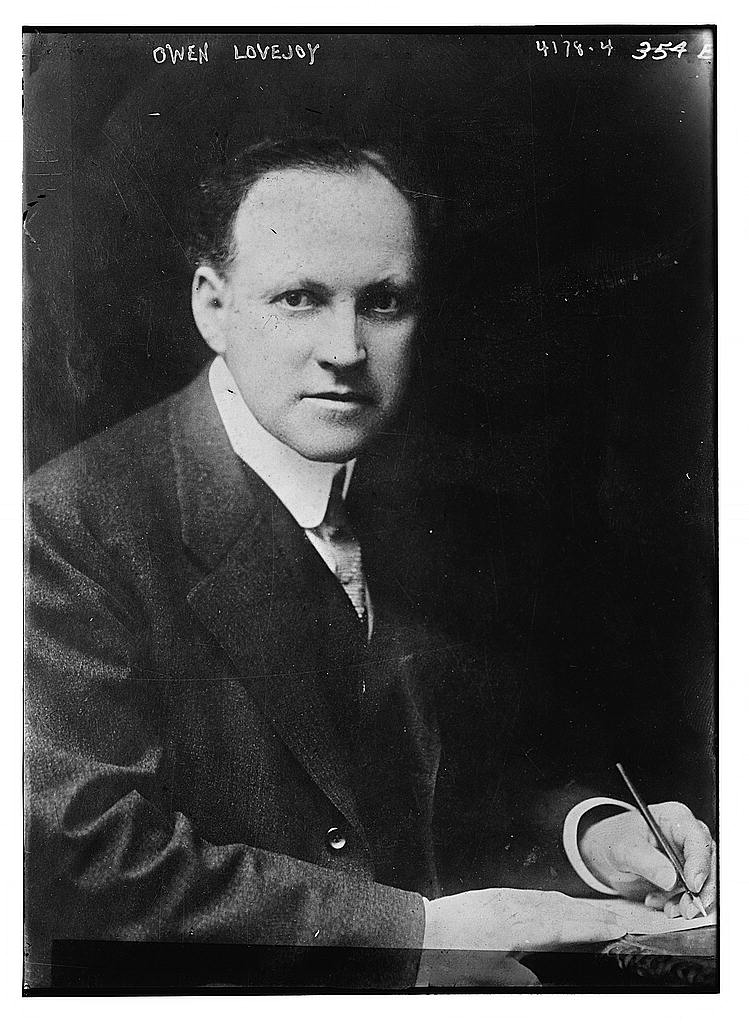
It’s a strategy that we have seen throughout U.S. history. Consider the Election of 1860, in which Illinois Republicans employed Owen Lovejoy to campaign for Abraham Lincoln. Lovejoy, a known abolitionist and controversial figure, seemed like an unlikely choice to commission to persuade Republican votes. However, he would become one of their most valuable weapons. 

Owen Lovejoy

Lovejoy, was anything but quiet about his position on abolishing slavery, maintaining him an infamous reputation in Southern Illinois. The Republican party knew that if they ignored Lovejoy, he could become ammo for the Democratic party, in which they could point to his radical position as an attempt to hide or disguise their “actual” position on the institution of slavery. Those opposing Lincoln’s calls for the end to the expansion of slavery feared that with the realization of Black people’s natural rights would come the realization of political rights and, thus, a chipping of white supremacy. 

Recognizing this fear of Republicans being “too radical” towards slavery, Illinois Republicans thought: who better to explain our moderate attitudes towards slavery than known extremist, Lovejoy? In an attempt to appear less radical, Illinois Republicans employed one of their most radical members to rallying the state’s conservatives for Lincoln. 

This use of rhetorical radicalism is familiar to us as we look at today’s election. Labeled as “far-left”, it is up to the Harris campaign to shift Trump’s narrative of her. We see this in how Harris speaks about gun control. 

During the Presidential debate between the VP and Trump, Harris took the time to shut down rumors that she and her running mate, Tim Waltz, want to “take everyone’s guns away”, as Trump alleged. She reaffirmed her stance later on Oprah, even joking that if “someone breaks into [her] house… they’re getting shot.” 

By painting herself as a gun-owner, who has no intention of taking people’s guns away, it could actually validate her stance on supporting stricter gun laws for some American voters. By clarifying that she does not intend to abolish the Second Amendment, and that she is not some “radical liberal”, some Republicans may be more likely to listen to her argument for better gun control. 

It is this same strategy that the Illinois Republicans employed. By appearing less radical, Harris can gain support from hesitant voters and also bolster her support because, now, her actual opinions and ideas don’t seem as extreme, and may not be as immediately dismissed. Illinois Republicans attempted to appear less radical towards slavery through rhetoric that reinforced white labor protection, denied Black people fundamental civil liberties, and upheld white supremacy. By appearing less radical, Illinois Republicans too hoped to garner more support from undecided or conservative voters for Lincoln, and the campaign’s call for the end of the expansion of slavery. 

Through these elections we can see that, when party tensions are high, and distrust grows between partisans, it becomes essential to appear more moderate and assuage the fears of those who find the candidates “too liberal”. In an election, a progressive candidate must ask themselves: How do we argue for change while promising to move slow enough? How do we move forward while meeting in the middle? How do we appear progressive, while picking up the missing votes in the middle?

The Clarence Thomas Conundrum

Clarence Thomas has long been a controversial figure since his public emergence. When Anita Hill accused Thomas of sexual harassment during his confirmation hearings in 1991 all the way up to his recent judicial rulings, the Thomas name has lived in infamy, to say the least. His strict originalist interpretation of the Constitution has largely served to benefit conservative politicians, raising objections regarding his adherence to judicial code of conduct—particularly considering his wife’s rampant conservative activism. In the light of the January 6th capitol insurrection and consequent litigation involving Thomas, his rulings regarding past & present contested elections take on a new context.

Contested Election, Contested Decision

One of Thomas’ initial controversies, the Bush v. Gore decision set a landmark precedent regarding the court’s role in mediating the contested election. The election between George W. Bush and Al Gore came down to a close vote as the media was divided on who would win. The results were thrown into contestation when news of Florida’s ballot results narrowed the margin of victory for Gore. As a result, the votes were recounted under state law and continued to be contested as suspect due to the varying means of how the recount was conducted (by hand, machine, etc) and how voter intent was discerned. In addition, there were sources of potential conflicts of interest for both Gore and Bush; Jeb Bush, Bush’s brother, was the governor of Florida and Katherine Harris was a Bush campaigner and Florida’s Secretary of State while Gore campaign head Bob Butterworth was Florida’s attorney general. When brought to the Florida Supreme Court by Gore, they decided to allow manual recounts of votes in select Florida counties. The Bush campaign objected to this decision and took the case to the Federal Supreme Court who ruled that Florida court’s decision violated the equal protection clause in the Fourteenth Amendment (7-2) and that votes were no longer allowed to be recounted (5-4).

Thomas faced criticism, along with his other majority peers, against his definitive decision against the Florida courts. Among the dominating critiques of legislative misinterpretation by dissenting opinions laid a subtler, potentially less pervasive critique: conflict of interest. Thomas’ wife, Virginia (Ginni) L. Thomas was a member of the staunchly conservative Heritage Foundation that worked to aid the (incoming) Bush administration. In the Heritage Foundation, she worked to vet potential staff and cabinet appointments. Before the trial began, Thomas had been called to recuse himself due to his wife’s close ties to the Republican Party, specifically Bush, claiming a violation of 28 U.S. Code § 455. A section of the code reads as such:

(4) He knows that he, individually or as a fiduciary, or his spouse or minor child residing in his household, has a financial interest in the subject matter in controversy or in a party to the proceeding, or any other interest that could be substantially affected by the outcome of the proceeding;

(5) He or his spouse, or a person within the third degree of relationship to either of them, or the spouse of such a person:

(i) Is a party to the proceeding, or an officer, director, or trustee of a party;

(ii) Is acting as a lawyer in the proceeding;

(iii) Is known by the judge to have an interest that could be substantially affected by the outcome of the proceeding;

(iv) Is to the judge’s knowledge likely to be a material witness in the proceeding.

Thomas, obviously, did not recuse himself; at the time, the accusation had enough plausible deniability to not be considered a legitimate concern, despite Ginni Thomas’ position as the Director of Executive Branch Relations in the Heritage Foundation and the foundation’s connection to Bush.

My Wife is an Insurrectionist?

While the Bush admin connections were shaky, Ginni Thomas’ connection to the January 6th capitol riot was not. Upon learning of Joe Biden’s election win, she sent a string of messages to Mark Meadows, Donald Trump’s Chief of Staff, urging him to stop the steal, one of which being:

“Help This Great President stand firm, Mark!!!…You are the leader, with him, who is standing for America’s constitutional governance at the precipice. The majority knows Biden and the Left is attempting the greatest Heist of our History.”

The texts clearly indicate her engagement in stolen election conspiracy and her desire to incite some type of restorative action in response. She claimed the text correspondence was the result of an emotional reaction post-election and that her presence at the capitol on January 6th ended before the riots when pressed by the January 6th election committee. Regardless of her “intent,” its hard to claim her actions don’t violate the 28 U.S. Code § 455 with her connection to Trump’s staffers. Her insurrectionary actions make Thomas’ non-recusal all the more incriminating in the Trump v. United States presidential immunity decision and aids in the public’s increasing Supreme Court distrust. Moreover, Trump’s appointment of three originalist justices to the Supreme Court, all with similar controversies, continue to question the legitimacy of the court when ideological diversity is slowly dissipated and allegiance to Trump is given precedence—if the majority conservative judges act as a faction, who will hold the others accountable?


Sources

CBS San Francisco (December 30, 2022): Ginni Thomas tells Jan.6 committee she regrets texting with Meadows about 2020 election

Claudia Grisales (September 30, 2022): Supreme Court Justice Thomas’ wife Ginni has a long history of conservative activism

Bob Woodward and Robert Costa (March 24, 2022): Virginia Thomas urged White House chief to pursue unrelenting efforts to overturn the 2020 election, texts show

E.J Dionne and William Kristol (pp. 97-143, 2001): Bush v. Gore: The Court Cases and the Commentary

Election night in 2000: The media won their race to the presses, but did Gore or Bush win their presidential race?

It’s the year 2000, and we’re knee deep in the new age of technology—instantaneous information, y2k fashion and campaign websites galore. The 2000 Presidential Election was one of the first to widely utilize the internet and digital tools in its campaigning. And the wider media was part of the problem that got us into this huge mess of Bush v. Gore and everything it entailed. 

On Nov. 7, Election Night across the U.S., newspapers all over the country were attempting to call the election early; headlines for tomorrow’s paper were due. We had never seen the amount of instant news like this in a contested election—it had arguably been over a century since the last contested election. In 2000, news channels were able to practically live update viewers with the results of the election due to exit polling. The only problem was that the exit polling wasn’t accurate. 

In the early hours of Nov. 8, the margin between Bush and Gore’s votes narrowed. The election came down to Florida as a battleground state. As votes trickled in, newsrooms started calling the race. Fox News was the first to go on air and call Florida a victory for Bush. John Ellis, George W. Bush’s first cousin and a reporter for Fox News, told the New Yorker shortly after Fox’s mistake, “Everyone followed us.”

Fox had just effectively misinformed a nation of Americans with that seemingly innocent early race call. Even Jeb Bush, who arguably had a horse in the race, had more journalistic integrity than Fox News and said the numbers were still too close to call. Yet, Fox News  had managed to dupe Gore himself.

Soon after the unofficial results were called, Gore phoned Bush, informally conceding the election to Bush in what—funnily enough—would not be for the last time. Ellis told the New Yorker that just an hour after Fox called Florida for Bush, the news channel’s vote counter went into reversal for a second time. 

Gore phoned Bush again that night, retracting his concession. What would follow after this election day was over a month of legal battle, while the election results remained contested. 

Without the media’s role in the race, the 2000 election would very likely still have been an unclear race after election day. But the media certainly helped sow confusion in their rush to the presses. Columnists and political leaders were quick to remind the public of this journalistic sin in the lead up to the 2020 election. 

Now, Kamala Harris and Donald Trump are in an election projected to be possibly as close as the 2000 election—perhaps we should look to the 2000 election as a precedent. 


The Impact of the Unelected Silent Rulers

In 2000, George Walker Bush was elected to be the 43rd President of the United States, beating his Democratic opponent, Al Gore. Bush won the electoral vote while Gore won the popular vote, in a fashion one might call Trumpian today. This election was one of the most contested elections in US history, and for good reason. As I said earlier, Bush won the electoral vote, and this is a key factor when thinking about this election, as some people still think he might not have actually won even the electoral vote. In the state of Florida, the results were too close to call on election night, which lead to an automatic recount, a fairly banal situation all things considered. Where it loses all sense of banality, however, is when a controversy over various voting irregularities, including the nightmarish “hanging chads” on punch-card ballots, erupted which made it difficult to determine voter intent. Florida kept going back and forth on who had won the election with recount process that dragged on, and legal battles reaching the U.S. Supreme Court. That legal battle, intuitively named Bush v. Gore, had the Supreme Court rule over whether there should be a recount, which would question Bush’s victory. They infamously ruled to stop the recount, subsequently giving Bush Florida’s electoral votes.

The Supreme Court, on that day, might, and might is important here, have led to the election of the minority choice. That is detrimental when thinking of the protection of democracy. Even more interestingly, the decision said: “None are more conscious of the vital limits on judicial authority than are the Members of this Court, and none stand more in admiration of the Constitution’s design to leave the selection of the President to the people, through their legislatures, and to the political sphere. When contending parties invoke the process of the courts, however, it becomes our unsought responsibility to resolve the federal and constitutional issues the judicial system has been forced to confront”, themselves admitting to the importance of giving the Presidential nomination choice to the people, while simultaneously not allowing there to be a recount in case of doubt, in a razor-thin margin election.

This is fascinating, and terrifying, to think of considering the upcoming election, which will, undoubtably, be contested. Today’s court has also been criticized for exhibiting a less neutral and more politically driven decision-making tactics. Today, the Court has six republican judges and three democratic judges, which means that they might be swayed to make decisions based on party alliance, and with a clear majority in place, can we be sure they will be objective and simply stick to the laws of the Constitution? 2024 will, without a doubt, present many lawsuits which will end up in the hands of the “big” court. How, as an unelected body, can they end up being the subjective deciders for who is to be the next leader of this country?


Concessions: Protecting or Undermining Democracy?

The presidential election in 2000 was contested between Republican Texas Governor George W. Bush and Democratic Vice President Al Gore. Bush became the president despite Vice President Gore winning the popular vote. The results of the Electoral College were not clear at the time and remain contested. Bush won Florida’s electoral votes by such a close margin that a recount was required. A series of legal battles led to the very controversial Supreme Court decision in Bush v. Gore, which ended the recount, giving the victory to George W. Bush. On December 13, 2000 Al Gore conceded the election and congratulated George W. Bush on his victory. Citing an earlier acrimonious election, Gore quotes Senator Stephen Douglas’ concession to Abraham Lincoln: “Partisan feeling must yield to patriotism.” Gore’s language is clear and strong. Although he strongly disagreed with the court’s decision, he affirmed his acceptance of it and said, “for the sake of our unity as a people and the strength of our democracy, I offer my concession. I also accept my responsibility, which I will discharge unconditionally, to honor the new President-elect and do everything possible to help him bring Americans together.” Despite Gore’s credible and valid concerns about the process that awarded the presidency to Bush, he conceded the victory in order to preserve American democracy and the institutions that uphold it.

On the other hand, in the election of 2020, Donald Trump did not have legitimate reason to believe that he had won the election. Despite this, he persisted in claiming that the election was stolen, including filing (and losing) many lawsuits. During the recent vice presidential debate, JD Vance, Trump’s new running mate, again refused to say whether Trump lost the previous race. The speech that comes closest to a concession for Trump has some lines that seem similar to Gore’s from twenty years earlier. However, at no point does the former president actually say that he lost the election or that he is conceding. He merely says that a “new administration will be inaugurated.” He frames his challenges to the election as an attempt to “ensure the integrity of the vote” and to fight “to defend American democracy.” However, in doing so, he potentially encouraged, or at least failed to condemn, political violence against the institutions that make up American democracy.

Sources

E. J. Dionne and William Kristol, “Chronology,” eds. Bush v. Gore: The Court Cases and the Commentary (Washington, D.C.: Brookings Institution Press, 2001), http://www.jstor.org/stable/10.7864/j.ctvddztfj.

E. J. Dionne and William Kristol, “Introduction,” eds. Bush v. Gore: The Court Cases and the Commentary (Washington, D.C.: Brookings Institution Press, 2001), http://www.jstor.org/stable/10.7864/j.ctvddztfj.

Fast or Fair: The Balance Between an Expedient Election and a Legitimate One

The election of 2000 was as much about George W. Bush v. Al Gore as it was a test of expediency versus legitimate results. On election night in 2000, as news outlets like CNN called Florida for Bush, Al Gore prepared his concession speech, going so far as to call Bush to concede. But his campaign staff realized all was not as it seemed: Florida was still undecided. Gore retracted his concession to Bush and told his supporters that they still had a shot. Through the night, Florida was flipped for Gore and eventually returned to the too-close-to-call pile, leaving voters in a state of confusion that would stretch far beyond election day.


When it became clear in the days and weeks following November 7th that the electoral votes from Florida were indeed too close to call, the anxiety of not having a winner grew to a fever pitch — stoked by both the media and the candidates themselves. Due to the growing mediatization of American politics, it would be ill-advised to ignore the role that the media played in the outcome of the 2000 election, and how both the Bush and Gore campaigns used local and national media to their advantage. The initial scramble over how to award Florida was just the beginning: issues such as the butterfly ballots, votes from overseas, and perceptions of Gore being a sore loser or Bush ignoring due process were shaped, inflamed, and wielded based on how they were reported.


While it’s only natural for the uncertainty of an election as impactful as the presidency to be anxiety-inducing, the resulting spotlight on election officials in Florida, particularly those in Miami-Dade County, hindered the process of election certification by attempting to speed it up.


To what extent did the Bush and Gore campaigns — and the American people — want a quick result over a legitimate one? Both Bush and Gore believed an expedited process to be the best course because both believed their side had the legitimate claim to the presidency. And for everyone else, they wanted an answer — one way or another.


Between logistical issues of hand-counting ballots and the court-mandated deadline by which to report the results, election officials in Florida faced a Herculean task. The sanctity of their work was further compromised when a demonstration lead by Republican staffers known as the Brooks Brothers Riot forced local officials to shut down the recount prematurely. Public pressure, fostered by appeals from campaigns and portrayals in the media, has the ability to affect the due process of election certification and — in the case of violent demonstrations — threaten to undermine the legitimacy of elections.


In 2000, the Brooks Brothers Riot was an attempt to disrupt the counting of votes, led by Republicans who believed Bush’s win was legitimate. On January 6th, 2021, the attack on the US Capitol was perpetrated by Trump supporters who believed their candidate’s loss couldn’t possibly be legitimate. The question of expediency versus legitimacy became a different one for the Trump campaign: how quickly could they prove the election had been fraudulent?


The answer was never. Every possible avenue for election fraud to have taken place was followed, investigated, and duly reported on — perhaps in an attempt not to repeat the mistakes of narrowing the scope of scrutiny in 2000, but certainly to reinforce the legitimacy of the 2020 election. Notably, Roger Stone, one of most fervent proponents of the false claim that the 2020 election had been stolen by Democrats and a close ally of Donald Trump’s, also claims to have managed the Brooks Brothers Riot in 2000, thus demonstrating how fueling outrage among a candidate’s base can be used to put pressure on the results of an election — and how that can lead to violence.


As in 2000, the use of media, both television and social channels, is a powerful avenue through which to promote narratives of illegitimacy. The fleeting nature of the news cycle has only heightened the public’s need to have certainty in the outcome of a presidential election as soon as possible. But expediency cannot be valued over validity.


As the 2024 election approaches, we know the chances of having an answer on election night are slim. Rather than get swept up in the need to know the results, due process must be allowed to take place — and respected — so that we, the American people, can trust the outcome, whatever it may be.

Too Close to Call

The year 2000 was full of butterfly hair clips and butterfly ballots. Now, I don’t want to call my readers old—I’m pretty sure my parents and professor are the only people reading this—but even though 2000 seems like it was just a few years ago, I along with my fellow college students, were not even alive yet, so let’s recap!

The 2000 election is our first contested election since 1876. That’s not because we are skipping around, it’s because there wasn’t a contested presidential election for 124 years.

So, what happened?

This contested election came down to a race between Republican George W. Bush, and Democrat Al Gore.

The election was close—very close. On election night the media originally called Florida for Gore. The voter projection model they were using just wasn’t working, and moreover, people were leaving voting unsure if they had actually voted for their candidate. The media had to recall their announcement. Florida was still in play. Or was it? Florida seemed to be going for Bush and Gore conceded. But wait—it was too early. Florida was still too close and Gore un-conceded.

Florida was just way to close. A recount was in order. The Gore campaign brought up issues with ballots—they were confusing, and, in some cases, computers were not counting ballots where you could see that someone had tried to cast a vote. Further complicating the 36 day recount process, George Bush’s brother, Jeb, was the Governor of Florida, and the woman certifying the process, Florida secretary of state Kathrine Harris, was co-chair of Bush’s Florida campaign. The ballot errors and perceived conflicts of interest, along with the fact that Al Gore won the popular vote, galvanized Gore’s supporters.

The political battle eventually leads to the supreme court. In Bush v. Gore, the court sided 5-4 in favor of Bush, making him the next president.

I’d love to tell you exactly who to blame, but I would likely have to recall that answer. It’s simply too close to call.

So, Al Gore lost. If you are anything like my parents (hi mom!) I’m sure you still hold a grudge, but hey, this election is older than me, does it still matter?

Well, Yes, it does.

The questions it raised have not been answered: Is the electoral college democratic? What do we do when the people in charge of safeguarding the election also work for one side? What happens when we don’t trust our election processes? What happens when our process is inaccurate?

I don’t think we have unifying answers to these questions, but studying the 2000 election can help us start.

How Credible Does a President Need to Be?

The 2000 election saw a tight race between incumbent vice president Al Gore and Republican party nominee George W. Bush for the presidency. The election was characterized by a battle between Gore and Bush for Florida, of which the result could decide the presidency. This was due to a new kind of ballot called the butterfly ballot used in the election, which made it confusing for voters to know who they were voting for. This means that some voters left the voting booth not knowing who they voted for, or even if they voted for the candidate they wanted to vote for. 

What made this election unique compared to the other historic contested elections is that there was modern news media involved who were trying to call the election in real time. Conflicted news reports created confusion as to who actually won, which is in addition to the confusion about what should be done about the ballots. This meant that the election was sent to the courts. The issue with this, is that Bush had seemingly won the vote by the ballots, however many believed that Al Gore would have actually won the popular vote if you considered the amount of people who intended to vote for Gore and were unable to due to the election system. 

The instability caused by this crisis rattled the legitimacy of the election. Many media outlets called for the candidates to respond, including the Washington Post in an article titled “A Time to Act Presidential” which called for both candidates to endorse a full recount of Florida. This call for action is very interesting as it reflects how this crisis of legitimacy didn’t just affect who won, but it affected how the winner would be perceived as a president based on how they acted during the crisis. Applying this idea to a more recent election, Trump’s refusal to accept the results in 2020 was a huge hit to this credibility. Only time will tell how much this hit to his credibility will really matter when it comes to the 2024 election.

God forbid the 2000 election happened today

There’s no denying the influence of media in politics. But it can be easy to forget how dramatically its role has shifted in the past few decades.

In the election of 2000, the media was complicit in the chaos that grew out of the uncertain, and subsequently contested, vote count. Ultimately, mistakes by the media contributed to a large swath of the electorate perceiving the outcome to be illegitimate.

The scope of media has grown exponentially since 2000, and the landscape is far more fractured, which raises concerns about what influence it will have on the likely contestation of the 2024 election outcome. The 2020 election offered a glimpse of what’s at stake, revealing the pace at which misinformation spreads and undermines trust. It’s likely 2024 will only be worse.

2000: Media missteps bring electoral chaos

With the 2000 election coming down to a mere few hundred votes in Florida, the role of the media was central in how the nation understood — and misunderstood — the election results. On Election Night, major news networks called Florida for Al Gore early in the evening, only to retract their projections hours later. Then, some networks declared George W. Bush the winner, another premature call that led to confusion that persisted for weeks. 

The media was a mess. The back-and-forth in reporting fueled the sense of chaos. As the nation watched, the contested results became the focal point of a legal battle that ended with the Supreme Court’s decision in Bush v. Gore. By making early calls that turned out to be incorrect, outlets inadvertently gave each side a justifiable claim that the election had been decided — first in favor of Gore, then Bush.

News organizations, all with a certain degree of bias and slant, were not merely passive observers and reporters of the facts of the unfolding recount. Rather, they had to make consequential decisions about which narratives, theories, and legal arguments to platform. These decisions about what to report and what to leave out were formative in shaping the public’s perception of whether Bush or Gore were more deserving of having their argument win out in the judicial sphere.

2024: A fractured, distrusted media landscape

Things look different in 2024. The traditional gatekeepers of news that were integral in 2000 — the CNNs of the world — are still major players, but they now compete for attention with social media, alternative news sites, podcasts, and political influencers. If 2020 taught us anything, it is that this fragmentation of media makes it far harder to establish a consensus on election results. And harder yet to contain narratives that seek to undermine them.

If the 2000 election was contested because of confusion sown by misreporting, the potential for the 2024 election to be contested lies in something more dangerous: the intentional misrepresentation of facts. 

In 2020, we witnessed how quickly false claims of election fraud spread online, particularly via social media. And it wasn’t just fringe websites and influencers — it was mainstream conservative outlets. Fox News ended up being on the hook for more than $750 million in damages as a result of its knowing lies about the integrity of voting machines. By the time the dust settled, millions of Americans doubted the legitimacy of the election. In fact, in many ways, the dust has yet to settle, as JD Vance was asked just this week in the vice-presidential debate about whether he believes President Biden won the 2020 election. The continued belief in claims that originated on social media reveal that online rhetoric is not only pervasive but also convincing.

Amplifying discontent, disinformation

What’s particularly concerning is that in 2024, the media isn’t just reporting on election controversies. It’s amplifying them. In 2000, major news outlets were intent on getting it right, correcting themselves when they made mistakes and attempting to refocus the public narrative when misinformation flared up. But today’s fractured media environment allows competing stories to go largely unchecked. If one side contests the results of the 2024 election, there will be an endless supply of platforms willing to amplify that message, regardless of its factual accuracy.

I think it’s a worthy thought experiment to imagine if the 2000 election happened today. It wouldn’t just be a few miscalls by networks. It would be a deluge of misinformation. Conspiracy theories about the recount. Claims of a “rigged” election or voter fraud. Potential corruption and violence as the recounts took place. “Stop the Steal” part two would be initiated. It would spread like wildfire on social media, and there would be little hope of combatting the lies. 

I have a difficult time believing that anyone would have trust in the election system if the 2000 election occurred in our current media landscape. Ultimately, I don’t think it is a stretch to say that as soon as trust in the electoral system is lost, the perceived legitimacy of the president is not far behind. 

Looking at election day just a month away, the question is not just whether the results will be contested, but how the media will shape that contestation. If the election is close, or perhaps even if it’s not, we will see competing narratives from the start. Even though mainstream outlets will likely focus on facts and legal proceedings, they will simultaneously be battling alternative media pushing more sensational narratives.

In 2000, it was misreporting by trusted sources that led to confusion. In 2024, the problem may be far worse — not the result of a mistake, but because the media landscape is designed to amplify contestation. When every news site, influencer, and social media user can present their version of events, the ability to establish a shared reality erodes. The more it erodes, the more real democracy’s collapse becomes.

Two Views on Bush v. Gore and a Takeaway for 2024

It is the year 2000 and as a believer in the American ideal of democracy, you want a fair and free election. The good news is that both of the candidates agree! The bad news: state courts will feud with federal courts, the powers afforded state legislatures will clash with interpretations of federal law, and the only bipartisan agreement will be lawyers from both sides making money. 

November 7 approaches and passes without a winner. Razor-thin voting margins are deciding states across the country. Florida emerges as the deciding factor with its 25 electoral votes being enough to guarantee either candidate the Presidency. Supporters of Gore breathe a sigh of relief: all major news organizations just declared him the winner of Florida. Their method of analysis needed to be revised though. Exit polls were inaccurate and Bush appeared to be winning the actual vote tallies. News anchors across America would return Florida to the undecided category and await the results. Bush seemed to be the favorite and networks would once again declare a winner of Florida – this time being Bush. After another retraction, with the state once again becoming undecided, the Florida Election Code would necessitate a machine recount with Bush ending after with a historically slim lead of 327 votes.

The Gore campaign calls for hand recounts in the key democratic counties of Volusia, Palm Beach, Broward, and Miami-Dade. The Florida Secretary of State would keep the requirement for counties to submit votes by November 14. Manual recounts would fail to meet the deadline and the Gore campaign would sue to extend the required reporting date. The Florida Supreme Court ultimately decided to allow the counties to manually recount if they needed to. During this, the Bush campaign would unsuccessfully sue to halt the manual recount. Likewise, Judge Terry Lewis would rule that the Secretary could certify the election results without a recount. The Florida Supreme Court would step in again to halt this decision and support hand recounts until November 26. Republican legislators would convene to certify the electors at this point and the Florida Supreme Court would back manual recounts of all “undervotes” (a term that means a discarded ballot due to unclear markings). The next day the U.S. Supreme Court would block the ruling after hearing arguments from Bush and Gore’s legal team and issuing their controversial opinion outlined in Bush v. Gore that the “Equal Protection Clause” was violated. Gore would concede after this and Bush would be awarded Florida’s electoral votes winning the Presidency. 

Opinions differ today. Looking at “The Unbearable Rightness of Bush v. Gore” where Lund argues that the partial recount ordered by the Florida Supreme Court constitutes “a form of vote dilution” and that the Florida Supreme Court issued opinions that do not reasonably fit within processes outlined in Article II of the Constitution that states, “Each State shall appoint, in such Manner as the Legislature thereof may direct, a Number of Electors”. 

Lund argues that the Florida Supreme Court was ruling in opposition to the legislature’s view that the election was ready to be certified, violating Article II. Central to that disagreement was the Florida Court’s assumption that close elections created enough uncertainty about outcomes to justify recounts even if the burden of proof that recounts would change the results hasn’t been met. Lund argues that this logic is undermined by the Florida Court’s decision to request recounts only with ballots that Gore contested (Lund specifically highlights the recount of Miami-Dade being the 9000 “undervotes” and not the entire county or simply a statewide recount). The court would also order some votes to be added to Gore’s certified totals, including ones that were only partially recounted. 

Yet, the Florida Supreme Court ultimately dictates what Florida law is valid and what isn’t. Could the Florida Supreme Court make such an erroneous decision in interpreting that law (that governs the legislature) that it betrays the power given to the legislature in the Constitution? In Bush v. Palm Beach County Canvassing Board, the (Federal) Supreme Court would hold that when it comes to choosing electors the state legislatures get their power from Article II of the Constitution which supersedes the Florida Supreme Court interpretation. 

Secondly, Lund (agreeing with Bush’s argument in Bush v. Gore) argues that selectively recounting was improper. Why so? For example: If Gore was able to successfully challenge the results in the specified countries it established a precedent that candidates could obtain a geographically biased recount in a statewide election. Would this not be in opposition to the Equal Protection Clause of the Constitution?

Simply, did the Florida Court’s decision create an untenable mess of an election system? Lund argues it did, and the Supreme Court’s decision was correct in Bush v. Gore.

The case isn’t settled yet though, Laurence H. Tribe offers a subtle rebuttal titled “The Unbearable Wrongness of Bush v. Gore”. Does Article II impose substantive constraints on a state court’s power to interpret its state election laws, does the Equal Protection Clause mandate precisely drawn and completely uniform standards for recounting electoral ballots? Tribe finds it questionable how Lund dismisses these difficult procedural questions.

Tribe argues that the court’s interpretation of the Equal Protection Clause conflicts with its remedy to halt the recounts. He presents Bush v. Gore as fundamentally an issue for a state court that the Supreme Court had no business intervening in. Why? First, Tribe highlights that Article II, the Florida Supreme Court overstepping its bounds and conflicting with the state legislature’s constitutional powers, failed to convince a majority of the Justices (who ruled exclusively on equal protection grounds). Tackling the Equal Protection Clause, Tribe points out that by discounting recounts as a form of selective vote counting you give zero protection to the ballots that remain uncounted and potentially valid. Especially concerning is the idea that if the Florida Supreme Court had improperly ordered recounting the correct remedy would be halting the count process instead of proposing an alternative. 

Adding on he points out that recounting specific ballots would not violate the Equal Protection Clause if one asks the reasoning for the special treatment of those ballots. Was it based on race, gender, or a specific category or voter? Tribe argues no. The court has been lenient with giving extra weight to voters based on political partisanship and Tribe cites Gaffney v. Cummings where the court allowed gerrymandering expressly designed to help incumbent politicians as long as it wasn’t disenfranchising a group of people based on race, gender, or any constitutionally recognized group.

Lastly, Tribe rejects the notion that the recount was a form of court activism. It was not guaranteed to help Gore, not shown to only help Gore, and perhaps could have helped Bush. In the first place, if there was a “partisan” choosing of the four democratic-leaning counties to initiate a manual recount it would have been due to Gore petitioning the court. If Bush had petitioned the court (through the legal means laid out in the Florida Constitution) he could have had recounts in close counties. The Florida Supreme Court had responded to the only requests for recounts they had in front of them. Lastly, Tribe highlights the Florida Supreme Court only permitted looking into whether a thrown-out ballot was legal, it did not underweight any of the legally cast votes. 

The election of 2000 showcased two partisan parties using legal means within our system to dispute a too-close-to-call election. It highlighted an oddity of the United States system that appeals to a constitution and written set of laws but ultimately cedes authority to an unelected court to interpret those laws. In 2000, the Supreme Court opened the door to intervene in state elections when it disagreed with a state court. This year the state court decides if Pennsylvania (a close substitute for Florida in 2000) can throw out “undated ballots”.  Could the Supreme Court be appealed to again in another decisive election? 

Bush v. Gore is remembered by some as a partisan decision that further discredited the Supreme Court and by others as an authoritative court blocking partisan challenges. Today the Supreme Court further intertangles itself into state election processes with cases granting broad immunity to Presidents like Trump v. United States, blocking Colorado courts that viewed Section 3 of the Fourteenth Amendment as prohibiting insurrectionists from office in Donald J. Trump v. Norma Anderson, and allowing South Carolina to use a congressional map that had previously been ruled discriminatory (which seems at odds with the Equal Protection Clause reasoning) in Alexander v. South Carolina State Conference of the NAACP.  

The Supreme Court’s willingness to intervene in electoral matters increasingly creates uncertainty over how state laws surrounding elections will be held up. Whether you agree with Lund or Tribe, is an increasing reliance on unelected courts safeguarding our democracy? While it may prevent partisan abuses, it could also deepen distrust in the democratic process if the court becomes viewed as the partisans themselves. Bush v. Gore served as a warning for the future: increasingly close elections in battleground states will find their ultimate resolution not at the ballot box, but in the courtroom. If elections are decided in the courtroom, where does that leave us, the voters? Courtrooms should not become the ultimate deciders of elections and the best defense against that is following the intention of the Constitution: focusing on counting every vote, not partisan conflicts deciding which vote counts. 


Sources:

https://www.law.cornell.edu/wex/due_process

https://constitution.congress.gov/constitution/article-2/

https://www.law.gmu.edu/pubs/papers/03_33

https://papers.ssrn.com/sol3/papers.cfm?abstract_id=267874

https://www.jstor.org/stable/10.7864/j.ctvddztfj

https://www.npr.org/2024/09/26/nx-s1-5111886/pennsylvania-mail-in-ballot-lawsuit-2024-election

https://apnews.com/article/trump-immunity-supreme-court-capitol-riot-trial-72ec35de776315183e1db561257cb108

https://www.oyez.org/cases/2023/22-807

https://guides.law.stanford.edu/c.php?g=991108&p=7170216

« Older posts Newer posts »
css.php
The views and opinions expressed on individual web pages are strictly those of their authors and are not official statements of Grinnell College. Copyright Statement.