
The election of 1860 was a four-way race between Republican Abraham Lincoln, Democrat Stephen Douglas, Southern Democrat John C. Breckinridge, and Constitutional Unionist John Bell. Douglas and Bell represented a more moderate center, and Lincoln and Breckinridge were at each end of the spectrum on slavery policy. Lincoln won the presidency with an overwhelming victory in the North and no support in the South—in many states he was not even on the ballot.
The election of 1860 and Abraham Lincoln’s candidacy galvanized the support of a new group of politically active voters: the Wide Awakes. The Wide Awakes were made up of young white men, particularly those in their teens, twenties, and thirties. Many of them (about a quarter) had not even been eligible to vote in the previous presidential election. These young men were new to politics and operated outside of the traditional campaign structures. They relied on a pseudo-military aesthetic, “popular social events, an ethos of competitive fraternity, and even promotional comic books,” according to Jon Grinspan in “‘Young Men for War’: The Wide Awakes and Lincoln’s 1860 Presidential Campaign” (p. 358).
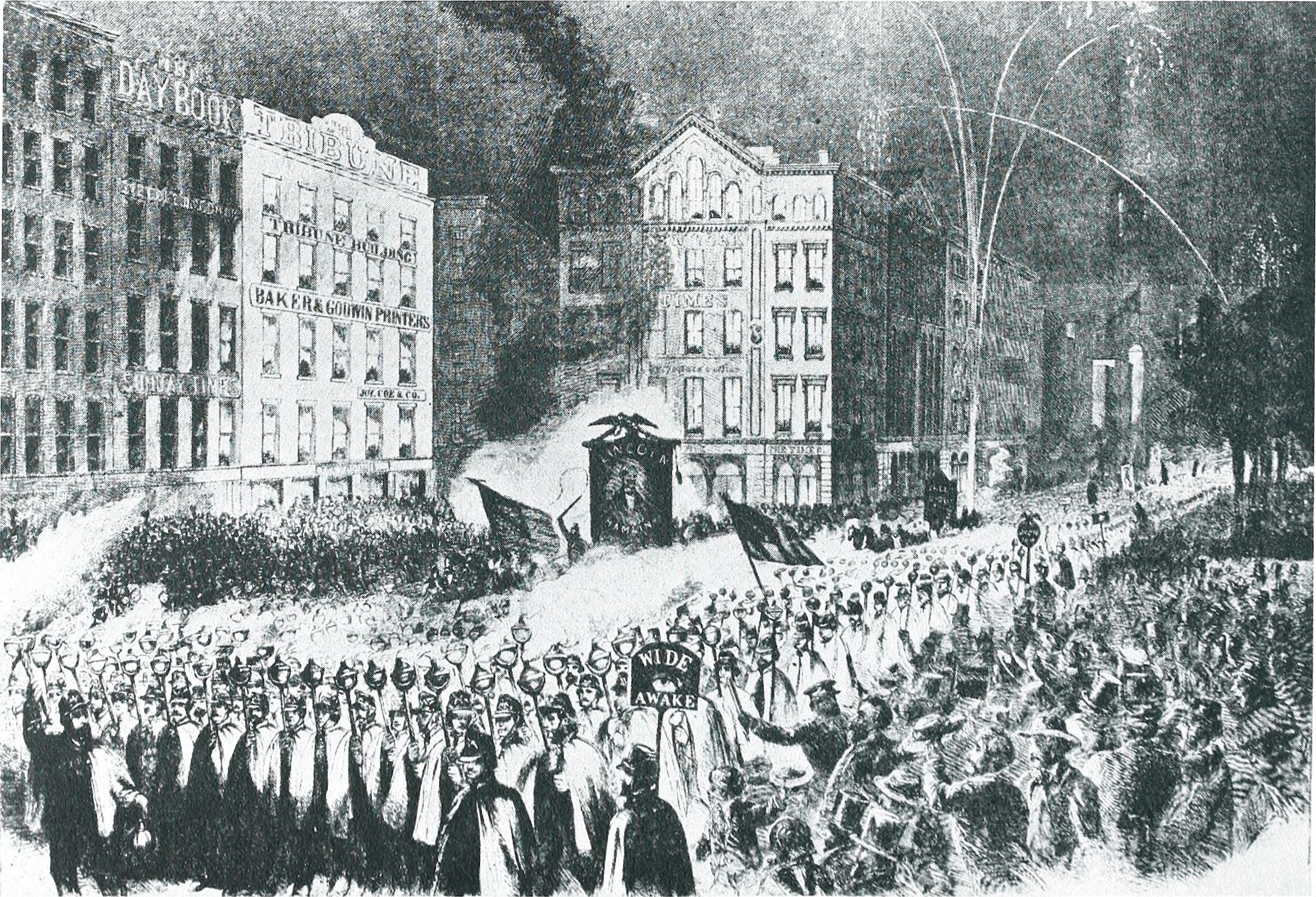
In modern elections, the youth vote is an important and often elusive one. Before the 2022 midterm elections, there was a flurry of news coverage and political discourse about whether young voters were disaffected and disillusioned, as well as what could be done to engage them with the political and electoral process. A 2022 NPR poll found that only 14% of young voters planned to vote that November. A single month later found the same outlet reporting that young voter turnout was the second highest it had been for a midterm election in the past three decades.
The political engagement of young people is often alarming, unsettling, or even frightening to older voters and those with more power in the party systems or political elites. They often work outside of the traditional systems to garner support, and they sometimes have differing or more extreme values from older voters. However, the election of 1860 and more recent ones, including the 2022 midterms, show the influence of the youth vote in shaping the future of politics. The presence and impact of “wide awake” young people in the 2024 presidential election remains to be seen.
Sources
Jon Grinspan, “‘Young Men for War’: The Wide Awakes and Lincoln’s 1860 Presidential Campaign,” The Journal of American History 96, no. 2 (2009): 357–78, http://www.jstor.org/stable/25622297.
Michael Burlingame, “Abraham Lincoln: Campaigns and Elections,” University of Virginia Miller Center, https://millercenter.org/president/lincoln/campaigns-and-elections.
Image credits: https://www.flickr.com/photos/internetarchivebookimages/14594018200/

Leave a Reply
You must be logged in to post a comment.