
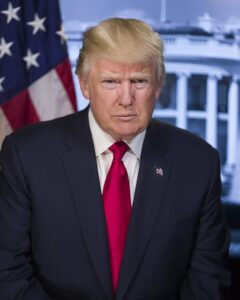
Portrait of President-elect Donald Trump, 2016
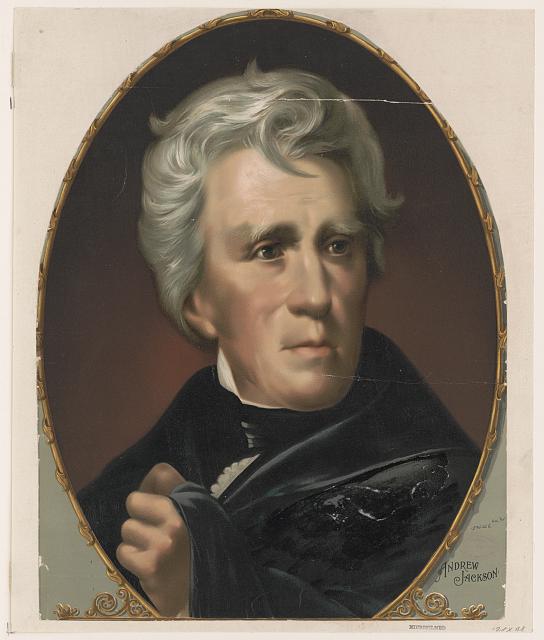
Andrew Jackson, c1896
In 2017, President Donald Trump compared himself to Andrew Jackson, citing that many people have told him that they have had similar elections. But what made them so similar that the president felt the need to equate them during his visit to Tennessee? How similar are the two really?
In the election of 1824, Andrew Jackson had won the popular vote and the most electoral college votes, but still ending up losing the presidency to John Quincy Adams. Jackson had the most electoral votes just not the majority, so the outcome of the election was up to the House of Representatives.This is similar to the way in which Hillary Clinton won the popular vote in 2016, but lost the electoral college vote to Donald Trump, ending with her losing the election because of this.
But what Trump didn’t realize when he made these comments in 2017 was that he would relate to the1824 election a lot more in 2020, especially when he accused the some votes as being corrupt. In the same vein, Andrew Jackson attributed his loss in the 1824 election to what he described as a “corrupt bargain”. This ‘corrupt bargain’ referred to how Henry Clay voted for John Quincy Adams for president when it was taken to the House of Representatives, and then Clay being appointed Adam’s Secretary of State after he became president . This idea of corruption is similar to what Trump claimed when he lost the 2020 election to Biden. Claims of voter fraud and election corruption became Trump’s mantra for the outcome of the 2020 election, and his platform for the 2024 election.
During the Jackson’s next presidential election in 1828, he had a come back story for the ages after being successfully elected as president despite his loss four years prior. Now, after calling 2020’s election corrupt, will Trump have a similar comeback story to Jackson in the 2024 election?

Leave a Reply
You must be logged in to post a comment.