
Although powerful figures might have attempted to rewrite history over the past 150 years, the concern of the Election of 1860 and secession was clearly slavery. The Lost Cause Movement in the South was extremely powerful and retrospectively blurred the lines of the truth so far that common knowledge was questioned. The fact that anyone could believe that slavery was not the main cause of the war is a testament to their incredible propaganda soon after the Civil War.
The political landscape during 1860 was extremely volatile which resulted in clear sectionalism. For the South, the problem of slavery worked hand and hand with their pride and politics. Because of this, they couldn’t support Stephen A. Douglas who believed in popular sovereignty. It was clear that the Democratic party needed to split up, because the disputes were regional and nothing more. With the Democrats severed into the North versus the South, it was evident more conflict was on the way. The 15 years before this election, there was a constant need for political compromise and this election was the hay that broke the camel’s back. The red carpet was laid out for the Republican candidate, Abraham Lincoln.
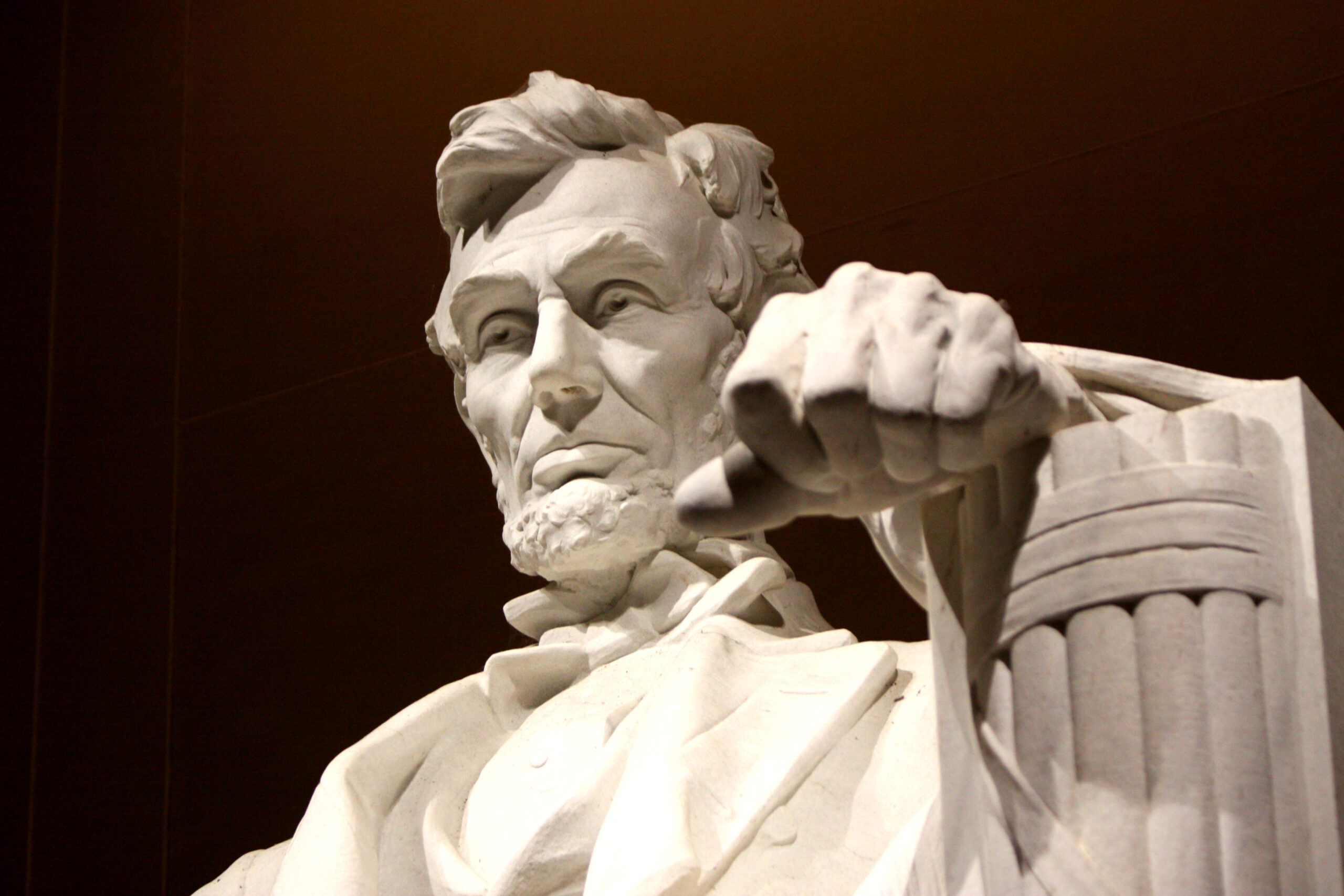
Abraham Lincoln Memorial, courtesy of Gage Skidmore.
This election was the most consequential in US history considering 11 states removed themselves from the Nation as a result. Lincoln was the clear front-runner because of his moderate stance on most topics. For the topic of slavery, he appealed to Northern sentiment that it is immoral and needs to be phased out of the country. He explained his free soil perspective at the Republican National Convention, “the new dogma that the Constitution, of its own force, carries Slavery into any or all of the Territories of the United States, is a dangerous political heresy”(May 18, 1860). He didn’t completely appeal to Abolitionists however, because of the continued racist sentiment the Republican party had but a Free Soil candidate was a better option than a popular sovereignty candidate. Even with such a moderate view on slavery, he didn’t win a single Southern state. For the most part, they preferred the Southern Democrat, John C. Breckinridge. After Lincoln won the election, It was clear that vehemently pro-slavery views of the South would not be realized.
South Carolina was the first state to take action, and she cited many ideological reasons for secession but once again the main issue was slavery. In the “Declaration of the Immediate Causes Which Induce and Justify the Secession of South Carolina from the Federal Union”, legislators mentioned the Articles of Confederation which showed their desire for stronger state power. The reason they wanted state power was to control the institution of slavery in their way because, “an increasing hostility on the part of the non-slaveholding States to the institution of slavery, has led to a disregard of their obligations”(December 24, 1860). In the Declaration, they even mentioned that the tensions built over the past 25 years but now they finally believe their system was under threat. If the argument that secession and the Civil War arises was for any reason but slavery, one can now understand how far from the truth this is. As the most consequential election in US history, it is vital to comprehend the true reasoning for the North and South’s decisions.

Leave a Reply
You must be logged in to post a comment.