
“She’s a radical, she’s a communist.” These were the words used by former conservative U.S. Representative Joe Scarborough to describe Kamala Harris. It’s no far cry from other conservatives’ descriptions of the Vice President from this election season. U.S. Senator Steve Daines claimed that “…she is unelectable because her positions are radical.”
It is unsurprising to see Trump’s campaign and his supporters paint Harris as “radical”, as, with partisan tensions high, it is exactly these fears about her “radical” stances on border control, fracking, funding the police, and gun control that cause hesitation in undecided and conservative voters. Therefore, it is even more unsurprising to see, in response, Harris attempting to moderate her image and tactically reject these far-left labels when needed.
It’s a strategy that we have seen throughout U.S. history. Consider the Election of 1860, in which Illinois Republicans employed Owen Lovejoy to campaign for Abraham Lincoln. Lovejoy, a known abolitionist and controversial figure, seemed like an unlikely choice to commission to persuade Republican votes. However, he would become one of their most valuable weapons.
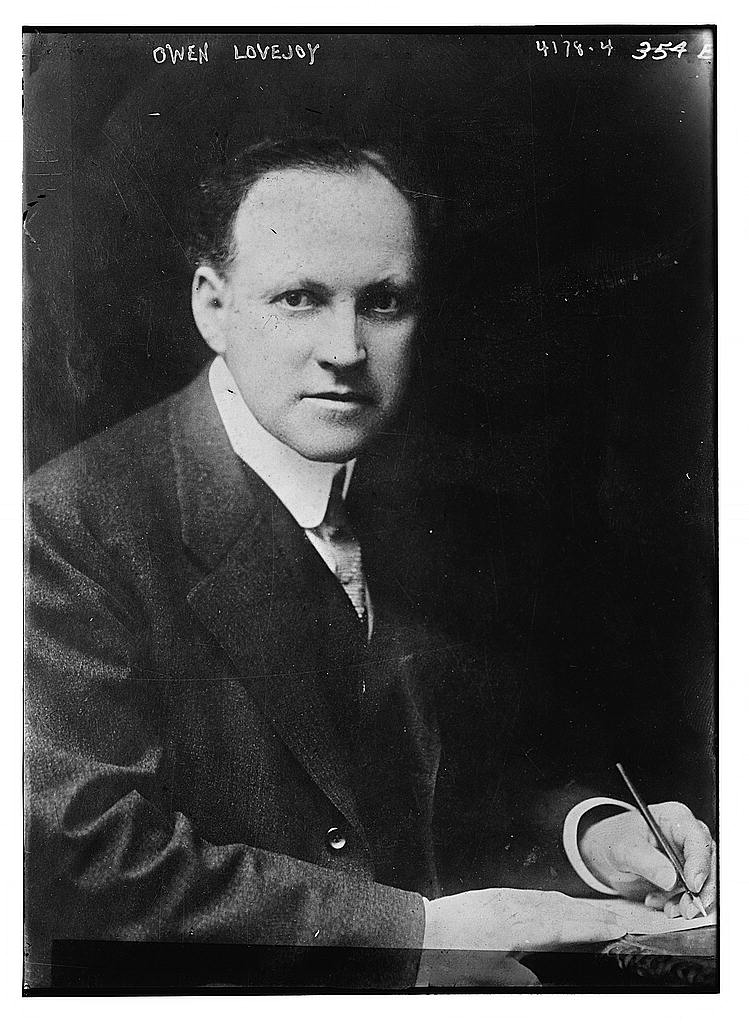
Owen Lovejoy
Lovejoy, was anything but quiet about his position on abolishing slavery, maintaining him an infamous reputation in Southern Illinois. The Republican party knew that if they ignored Lovejoy, he could become ammo for the Democratic party, in which they could point to his radical position as an attempt to hide or disguise their “actual” position on the institution of slavery. Those opposing Lincoln’s calls for the end to the expansion of slavery feared that with the realization of Black people’s natural rights would come the realization of political rights and, thus, a chipping of white supremacy.
Recognizing this fear of Republicans being “too radical” towards slavery, Illinois Republicans thought: who better to explain our moderate attitudes towards slavery than known extremist, Lovejoy? In an attempt to appear less radical, Illinois Republicans employed one of their most radical members to rallying the state’s conservatives for Lincoln.
This use of rhetorical radicalism is familiar to us as we look at today’s election. Labeled as “far-left”, it is up to the Harris campaign to shift Trump’s narrative of her. We see this in how Harris speaks about gun control.
During the Presidential debate between the VP and Trump, Harris took the time to shut down rumors that she and her running mate, Tim Waltz, want to “take everyone’s guns away”, as Trump alleged. She reaffirmed her stance later on Oprah, even joking that if “someone breaks into [her] house… they’re getting shot.”
By painting herself as a gun-owner, who has no intention of taking people’s guns away, it could actually validate her stance on supporting stricter gun laws for some American voters. By clarifying that she does not intend to abolish the Second Amendment, and that she is not some “radical liberal”, some Republicans may be more likely to listen to her argument for better gun control.
It is this same strategy that the Illinois Republicans employed. By appearing less radical, Harris can gain support from hesitant voters and also bolster her support because, now, her actual opinions and ideas don’t seem as extreme, and may not be as immediately dismissed. Illinois Republicans attempted to appear less radical towards slavery through rhetoric that reinforced white labor protection, denied Black people fundamental civil liberties, and upheld white supremacy. By appearing less radical, Illinois Republicans too hoped to garner more support from undecided or conservative voters for Lincoln, and the campaign’s call for the end of the expansion of slavery.
Through these elections we can see that, when party tensions are high, and distrust grows between partisans, it becomes essential to appear more moderate and assuage the fears of those who find the candidates “too liberal”. In an election, a progressive candidate must ask themselves: How do we argue for change while promising to move slow enough? How do we move forward while meeting in the middle? How do we appear progressive, while picking up the missing votes in the middle?

Leave a Reply
You must be logged in to post a comment.